Showing posts with label history. Show all posts

Monday, March 21, 2016

Hapless Historian Highlights!

Reworking the Writing
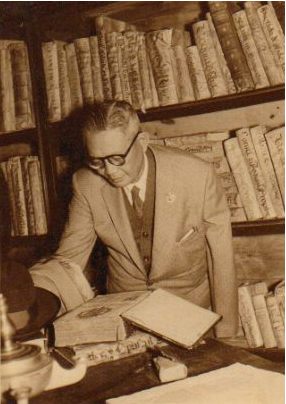
Antonio_abad.jpg
By Abadvibes via Wikimedia Commons
“Antonio Abad”

Here’s What’s Coming Up

In light of recent changes in my goals, I’m refocusing this space to highlight Fil-Am history, US history and my own reflections on these topics. Posts will come each Monday. This space will focus across the spectrum on articles, film and cuisine experiences I find interesting, and ones that may interest a few people who visit this blog.


Please let me know what you’d like to see in the coming weeks, as I am always looking for your perspectives!


In the meantime, here’s a few highlights from the past year or so. These are moments I liked and ones you might want to revisit. Feel free to comment or message me if you’d like to know more! Thank you for your time and continued support.

Hungry History Highlights

Hungry History: Filipino Arroz Caldo!! (Lugaw)

This is a lovely, savory rice porridge that I was introduced to in graduate school. It comes in powdered instant versions, but is not complicated to make with a good recipe. Like many Filipino recipes, this seems to be one where each family has their version. The key is good quality ingredients and knowing where you need to make adjustments for your family’s needs. Water and chicken broth can be mixed to adjust the sodium levels.

Hungry History: Sandwiches!!

I was always curious where the word “sandwich” came from, as I was curious about a number of words we use (did you know the English “typhoon” has Chinese and Persian origins?). Additionally, I was wondering about the short history of something as popular as the American sandwich, which has a place in nearly all of my generation’s sack lunches (does anyone use sacks anymore?). I also made a really yummy sandwich that inspired this post, pictured!

Hungry History: Spam Musubi!!

Surprisingly, I’d never had these Hawaiian specialities, even after my short trip to the Islands. I had always thought Spam was a mystery meat of questionable quality, but was happy to find it can be used to make something really yummy!

Movie Monday Highlights

Movie Monday: "The Patriot," a film by Roland Emmerich

Admittedly liberal in historical accuracy and heavy on emotional appeal, the star power of Mel Gibson, coupled with the patriotic (pun intended) narrative, makes the awareness of this film no surprise. While it goes out of its way to vilify the British, and does look favorably on the Rebels, it does reflect many ideals that our nation, including the belief than anyone, regardless of skin color, has an opportunity (albeit unequally) to make something of themselves. It is also entertaining as one of my “guilty” history-related pleasures.

Movie Monday: "The Mountain Thief," a film by Gerry Balasta, 2010

This was an eye-opening film for me, particularly as it relates to the Philippines. While I had come across poverty in my graduate research before, I don’t believe many films capture the sheer gap between haves and have nots as this one. It is undeniably real in its portrayals, and I’m so thankful it had English subtitles. As I mention in the review, I believe this film “should be required viewing for all college students, ‘first world’ citizens worldwide, and professed religious individuals who would seek to know and better the world,” so everyone can understand the side effects of political and economic inequality.

Proud Moment!

My Winning Submission: EDSA/People Power Revolution Essay Writing Contest

I’ve already posted this multiple times, so please excuse me, but it still stands as one of my more proud recent moments while working on this blog. The Bay Area Fil-Am community members were very welcoming and had nothing but positive things to say about my submission. I was thankful to share the stage with several key Fil-Am and Filipino community members, as well as many talented writers and artists from music and poetry. I’ve made professional connections and reconnected a little with my Filipino and Fil-Am heritage. Thank you all so much!

Here’s to the Future

I am excited to move forward with my blog project, and for the topics and writings I have in the works. I want to thank you for your ongoing support, please click “Like” and keep in touch on Facebook to help guide where the content goes from here. Thank you so much for your ongoing support!

Monday, January 11, 2016

Movie Monday: "Proud," a film by Mary Pat Kelly, 2004.

Public Domain via Wikimedia Commons

This film came to my attention through Amazon Prime, as it was recommended based on my searches for American History films. I am happy that I got the chance to see this film. The narrative revolves around the exploits of the USS Mason (DE-529) destroyer escort during WWII, manned by a nearly all African American crew at a time when the military was segregated. This American history narrative is not well known or explored outside specialty history courses at a select few campuses. Unfortunately, historical narratives are sometimes limited by the prejudices and norms of the time they're written, and the USS Mason's narrative is a casualty of this condition. It is only from the 1970s, 80s and 90s that "minority history" has gained more recognition in the mainstream historical narrative.

Films like "Proud" are useful for introducing the audiences to hidden narratives, and serves to peak interest in the respective subject matter. "Proud" has a good quality cast that captures both the triumphs and shortcomings of WWII society and military efforts. The racism is present, and real, but is not overly front and center. The narrative focuses not as much on what society believes these men cannot do, but shows how the men themselves respond to the conditions they are introduced to, both in the navy and in the war. I'll admit, I know little about the mainstream actors in this film, so I cannot adequately comment on their respective filmographies. On viewing this film, however, it seems like each actor brought their respect and efforts to bear in their characters. What I appreciate a lot about this docudrama is the use of actual primary source footage from the USS Mason's missions. I believe this supports the overall structure of the film, as a grandfather narrating his experiences and memories to his grandson and friends.

The film opens with one of the main characters, as an older man, narrating his experience in Harlem, and how it became a home for him and his family. His grandson is living with him, and invites his friends over to listen to loud music in the early morning hours. His grandfather is woken up and goes downstairs to tell them to turn that noise off, and how the living situation really isn't working out. This sets the stage for him to tell his story, and how recognition for their efforts has been a long time coming. He has not held on to anger about the slight, however, and this paints the portrait of one seaman's response to their prejudicial treatment. He says that if he had given in to anger and resentment, it would have justified "their" (white men in government, American society, all the doubters, etc) point of view of African Americans at the time.

This film is intriguing to me, as I admit knowing relatively little of the African American experience during World War II. My own research mainly centers on Asian American experiences during World War II, so I am thankful for having another perspective. While it is not surprising to see that prejudice reigned among sailors and government officials during this time, what was refreshing was how the film portrayed the Captain of the USS Mason caring for his crewmen within the context of sailors, not African Americans who happen to be sailors. Further, I was surprised at the treatment of the sailors on shore-leave in Northern Ireland, where the men welcomed them as Yankees first, not black men. The narrator states that he was surprised the crew had to travel all that way to be treated like Americans.

Any viewer interested in the lesser known, but well worthwhile, stories of WWII may like this film. While not perfect, it is a refreshing plot reminds viewers that Americans of all backgrounds fought against the Axis Powers. Whether viewers see too much patriotism woven in this story is largely left to the opinions of each individual, but it is hard not to feel a sense of national pride any time there is a war film. Hopefully, films like "Proud" will be shown more often in classrooms, if not necessarily for the raw historical accuracy, then to visually represent alternative stories for students not familiar with the role all Americans played in the Allied victory in WWII.

Stream or Purchase "Proud" on Amazon

Monday, July 27, 2015

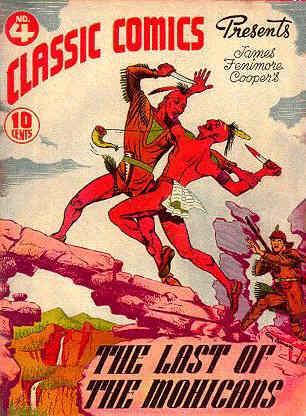
Movie Monday: "Last of the Mohicans" a film by Michael Mann, 1992

CC_No_04_Last_of_the_Mohicans.JPG

Last of the Mohicans (1992) a film by Michael Mann

I’ve held on to this film in DVD format for several reasons. Firstly, it is a good film that showcases quality actors and quality script that stands the test of time. Secondly, the price. $5 at a big box store. This historic drama tells the story of a quickly disappearing way of life, as two cultural worldviews come into conflict and inevitably arrive at an endgame where one side wins, and one side loses. Daniel Day Lewis plays the main protagonist, Hawkeye, an adopted white man frontiersman based on novelist Cooper’s character Natty Bumppo. His adopted father Chingachgook, played by Russell Means, who did not start his acting career until he was in his 50’s. Wes Studi portrays Magua, enemy of Colonel Munro (John Maurice Roëves) and a main antagonist of the film. The casting embraces diversity with sensitivity towards actors of indigenous ethnicity.


The opening shows Hawkeye (Lewis) stalking a buck with his adopted father (Means) and brother, Uncas (Eric Schweig). After their successful hunt, they thank the spirit of the animal and thank him for giving up his life for their benefit. They hunt and trap for their sustenance, trading with the Dutch for silver, as opposed to the British and French custom of trading in “wampum and whiskey.” Their frontier world comes to an end with the war between Britain and France impacting their settler neighbors and friends, the Camerons, who participate in the colonial militia in defense of their homes and in (nominal) support of the British Crown. When the need to protect their homes from war parties conflicts with the needs of the British military, the militia and fort commander Munro come into conflict as to which needs are more important.


The emotional impact of the film is reflective of Mann’s style of film-making. As a director, he portrays the emotional side of the story and the human element in subtle, but engaging, ways. The source material, he said, was a wealth of information but not the be all for his inspiration.


"It's not a very good book," Mann said of Cooper’s original novel. He mentioned the novel comes from a landholding perspective, and “is almost a justification for a massive land grab…that the Euro-Americans will be a better steward of the riches that God bestowed upon American Indians. And that, of course, was not the perspective of American Indians. So the revision of history was one of the things I didn't care for in the novel.” This reflects the times, when many investors saw stewardship of the American continent as justification for their increasingly harsh treatment of indigenous Native American groups.


While the story is historic fiction, Mann captures existential human conflicts that many viewers can relate to. Duty to a greater cause vs freedoms and liberties, self-interest and the honor of the ethnic group are among a couple of the qualities explored in this film.


Overall, this is a capable film that succeeds in drawing the viewer into the characters. While a few scenes seem forced, or the dialogue a little stale, it does not greatly detract from the quality of the film and the actors. Daniel Day Lewis famously only ate what he killed, and learned the skills of a frontiersman to give a more capable performance as Hawkeye. Viewers will appreciate such attention to detail, even though it sometimes teeters on the cliche “white man saves the minority” narrative that comes with such films and Dances with Wolves or Avatar.


Purchase or Stream "Last of the Mohicans" via Amazon

History Notes:

Native American cooperative relationships with European powers
Nathaniel Poe's role as central or peripheral to events
Source material of the original novel and the 1992 film
historical fiction vs factual information


Monday, July 20, 2015

Movie Monday: "John Adams" an HBO series by Tom Hooper

Portrait of VP John Adams


On the recommendation of history colleagues, I found a copy of the HBO Series “John Adams” at the local library, and I’m not disappointed. This historical drama follows the career and presidency of Founding Father John Adams, including his participation in the American Revolution and his activities in foreign arenas like France and Britain during the establishment of the American Government. This series doesn’t avoid the darker aspects of Adams’ experience, and seems to give a balanced view of his life.

Like many HBO series, the acting is on point. Lead Paul Giamatti brings this John Adams to life and reflects his educational background in theater and broadway. David Morse towers over the other characters as bigger-than-life General and President George Washington, and gives a subdued performance as the first leader of the new government. Laura Linney is an excellent Abigail Adams, giving life to the famous first Second Lady and second First Lady of the United States.

As the series opens, Adams (Giamatti) is a successful lawyer in Boston, with wife Abigail (Linney) and children John Quincy, Abigail and Charles. The cries of “Fire! Fire!” echo through his home as British soldiers fire upon a crowd of protesters to Britain’s overreaching influence in the colonies. Adams is the only lawyer in Boston willing to take the case, which opens him up to attacks and criticisms from his patriotic neighbors.

The benefit of a series such as “John Adams” is how human our founding heroes become when treated in a balanced manner. Putting aside the romanticism surrounding the founding of the United States, a student of history will appreciate the nuanced treatment. Additionally, the series does not marginalize the other key members among Founding Fathers (and Mothers), which can sometimes happen when a series focuses on one particular subject, or minimize their influence on the main character. The humanity present in this series brings the founding members down to a relatable level, in particular the balance between work and life, family, religion, and the fundamental principles of the United States.

What I found most instructive is how contentious the developing government of the United States was during the first few years. Every member had their own interests and concepts of who held what power, and the extent of that power over the individual states. As a newer student of early American history, I found these insights informative for future study. Additionally, the sheer weight of what was before the Revolutionary leadership, founding a new country, is not lost on the artists who changed the characters’ appearance based on circumstances. The various epidemics that swept the New England territories, coupled with the stress, play out on the faces of the actors throughout the series.

A viewer hoping to bolster their patriotic feelings will likely feel kinship towards the characters in this historical drama. Students of history will appreciate the perspectives of the film, and the contentious nature as more reflective of reality than the simple founding myths many of us grew up on. There is very little to fault in this series, from my perspective, as there was clearly enough financial support to give “John Adams” a suitable treatment.


Purchase or stream "John Adams" through Amazon

History Notes:

The differences between fact and fiction in historical drama (see historical inaccuracies)
Religion and political backgrounds of the Founding Fathers and others
Family life of John Adams
David McCullough's book "John Adams," inspiration for this HBO series

Monday, July 6, 2015

Movie Monday: "Picture Bride," a film by Kayo Hatta

Department of Labor Picture Bride Documentation
Wikimedia Collection

Hatta, Kayo. "Picture Bride," starring Kido Yuki, Takayama Akira, and Tamlyn Tomita, 1995.

It was by chance I happened upon “Picture Bride” at the library and was moved to rent it. A riveting historical drama, "Picture Bride" depicts the life of a young Japanese immigrant woman working on the sugar cane fields in Hawaii during the early 1900s. It shows how both characters used deception to improve their chances of sealing the arranged marriage. Photography innovated the “picture bride” system that initially relied on written letters alone or face-to-face meetings. 

This film provides a solid script for strong performances that make the film particularly moving. Lead actress Kudo Yuki gives picture bride Riyo the emotional expressions that capture the apprehension and exhaustion a newly arrived city girl experiences under field conditions. Actor Takayama Akira ably expresses the hard life and defeatist mentality many bachelor field hands experienced under the Gentleman's Agreement of 1907 and prejudicial labor relationships. Finally, Tamlyn Tomita supports the leads with her capable performance as a strong young picture bride who must take on the roles of mother and mentor. One important aspect is that the cast are all capable Japanese and Japanese-American actors, a novel circumstance given the recent controversial casting choices in 2015 Hollywood.

When Riyo (Kudo) first arrives at the immigration office on the shores of the territory of Hawaii, she meets her husband for the first time, a field hand (Takayama) almost two decades her senior. This fact, not shown in the youthful photo he sent, sets up tensions from the start. The various hardships the two newlyweds face include prejudicial ethnic conflict with white overseers, labor conflicts with fellow Filipino field hands, as well as the appeal of gambling as a downtime activity. Couple this with the relationship built on lies and the film contains plenty of tension and conflict. The challenges these characters face will illuminate an almost forgotten historical exchange network that greatly disrupted immigration to the United States.


One of the strongest aspects of this film is the human element that makes it so relatable to a variety of viewers. Many of us can relate to the class challenges of trying to get ahead in a tough work and social environment, particularly when it seems like the paychecks are never quite enough. Viewers may relate with the ethnic conflicts that plague both historic societies and today. For me, this film made me realize how blessed I am in my own life, particularly the great physical toil these characters face each and everyday, and how they manage to find positives.


Overall, this film is a great peek into the historic condition of “picture brides” under the Gentleman's Agreement of 1907. Not only does it depict the ethnic conflicts Filipinos and Japanese field workers faced, but also the different ethnic hierarchies that native Hawaiians felt in relation to the Anglo landowners and European (Portuguese) overseers. While the film does slip into too much pathos at times, the narrative does manage to express an accurate depiction, perhaps less intense than some authentic experiences, of Japanese immigrants under an inherently prejudicial legal and social system. If you’re a fan of historical dramas, this may be the film for you. Please post comments or suggestions below, and what films you'd like to see reviewed in future posts.


Purchase "Picture Bride" or stream via Netflix here.


Historical Notes for discussion in the comments:

  • Ethnic interrelationships and labor: Anglo and Euro owners vs. laboring minority; labor vs labor between Filipinos and Japanese
  • Labor conflicts, the company store, $1 fee for lack of work, $. 65/day and $300 to go back to Japan
  • Asian, mainly Japanese and Filipino actors cast in the film, Japanese language used instead of English (think Sayuri/Memoirs of a Geisha)


Friday, May 15, 2015

Book Review: "Converting California:Indians and Franciscans in the Missions, 1769-1836" by James Sandos


By Rennett Stowe (Flickr: Mission San Luis Obispo) [CC BY 2.0 (http://creativecommons.org/licenses/by/2.0)], via Wikimedia Commons

James A. Sandos, Converting California, Indians and Franciscans in the Missions, 1769-1836 (Yale University Press, 2004)

 Scholarship surrounding the Spanish Missionary period in California abounds with different interpretations. Some vilify the Spanish missionaries for essentially wiping out the Native American populations in California and disrupting their lives to destruction. Others opt for a more benign approach, complicated by cooperation and agency among the Native populations. James Sandos’ work on Franciscan conversion of the Native Americans is just such a work.

  Sandos’ overarching thesis is that the goal of the Franciscan mission was conversion of the Native Americans, however the meaning was limited or framed within their understanding of eighteenth and nineteenth century religious ideologies. While the relative intensity of faith the Native Americans brought to their conversion was diverse and somewhat unknowable given the sources, the Franciscan priests believed that once baptism and conversion was “sealed,” the Native Americans assumed not only the unspoken contract of living a pious, Christian lifestyle, but also agreed to a form of “spiritual debt peonage” to the missions (108). Sandos further emphasizes that these conversions were likely driven by survival interests like food, protection, and other material benefits that came to those who participated in musical arrangements that supported the mission.

  Sandos further argues that Franciscans were not intentional agents of a genocidal mission against the populations of the Native communities. In fact, there was a lot of internal concern for the maintenance of the population numbers given that the missions relied on these new populations not only for their spiritual goals, but as a steady supply of labor to support their mercantile efforts in trades like oils, candles, tallow and cattle. Sandos’ analysis, however, does seem to limit the discussion to physical genocide, particularly at the level of populations. What is important to recall here is the fact that the Franciscans did intend to commit a kind of cultural genocide, in that they did (ideally) want to replace the indigenous culture with a Christianized, Hispanic-oriented culture. In practice, however, this has been shown to not be the case, as Sandos illustrates with his argument that the missionary period formed a complex hybrid culture that the Franciscans and Native Americans both contributed to, where villains and heroes are not easily defined (184).

  Such arguments mirror other discussions within American West and Southwest borderlands’ communities, such as with James Brooks’ article "Violence, Exchange, and the Honor of Men", as well as Gutierrez’ chapter on "The Spanish Conquest of New Mexico," particularly outlining the conflicts between military conquest before 1573 and the focus on religious conversions by the Franciscans afterwards (Gutierrez, 46). A seemingly coherent argument between Gutierrez and Sandos is the relationship the Native Americans had to the celebration of Mass, where Gutierrez emphasizes not only the familiar aspects of the celebration with Native religious rituals, but also the pacifying effect such a “universal” celebration would have on the population (Gutierrez, 63).

  Sandos, however, emphasizes too the level of resistance the Native Americans had against the religious colonization efforts, particularly in the context of a “hidden transcript,” where the public display of acquiescence belies the very real, private resistance that exists under the surface. What is interesting here is the concept of the “hidden transcript,” as expanded upon in James C. Scott’s book Domination and the Arts of Resistance (a highly recommended work) which deals with the condition of Southern slavery. Sandos emphasizes that the experience of the Native Americans within the missionary system was not one of slavery as we understand it, but of pre-existing “debt peonage.”

  Sandos wishes to emphasize that his analysis avoids the dichotomous camps of Spanish missionary California, particularly the “Christophilic Triumphantalist” that overemphasizes the positive aspects of the Franciscan missions, against the “Christophobic Nihilist” who condemns the Franciscans for their disruptive, destructive efforts. While this point of view is admirable, modern scholarship almost always seem to avoid such black and white “camps” in favor of a more nuanced, gray area reading of what the experience was like. Sandos also mentions the role disease had on the Native American populations, particularly the spread of venereal disease. While these discussions are interesting, it may strengthen a future edition to consider works by Steven Hackel, whose work in ethnographic and environmental factors could strengthen Sandos’ own arguments.

  There are problems with parts of Sandos’ arguments. His discussion of how patriarchy was introduced by the Franciscan missionary system, which relies on the idea that there was a strong matriarchal culture or at least female agency previously, is somewhat problematic based on such assumptions and reduction of the diverse cultures of Native American communities. Further, the role of disease on the native populations also could be strengthened with further diving into more demographic information that would strengthen or counter his treatment of diseases’ impact. Steven Hackel’s later work Children of Coyote, for example, emphasizes the “dual revolutions” of disease introduction AND environmental factors that limited the traditional lifeways of the Native American communities, further influencing many of the men’s participation in the missionary system. Finally, Sandos’ reliance on French artist Louis Choris’ impressions of Native American male expressions places the reasoning on inherent psychological issues, when in fact ethnographic research shows it more to be a reflection of indigenous forms of etiquette, a fact that was not as deeply addressed as it could have been.

  Overall, this work is a useful addition to the historiography, particularly in the treatment of music and its role in Christianizing the Native American populations. The most original aspects of Sandos’ work is in this chapter, as he emphasizes the material benefits of participation in the musical activities. His treatment, too, of their acquisition of the Spanish language, and its potentially unifying role in communication across cultural groups, though Sandos isn’t sure of its full role. The prose is highly readable and quick, meaning historians and lay readers alike will benefit quickly from the salient arguments without getting bogged down in unnecessary complications.
Wednesday, May 13, 2015

Student Success: Keeping Yourself Clean

This might seem basic, but with many new freshman being out on their own for the first time, it needs to be covered as a fundamental part of success in a school environment. Keep yourself clean.

Keep Your Self Clean!


There's a lot of stress associated with being in a new environment, be it educational or professional. In order to present the best possible image to potential colleagues and professors, students should regularly clean.

      By Miguel Andrade (Own work) [Public domain], via Wikimedia Commons

      Shower: if you find yourself particularly busy in your first quarter in your new school environment, shower at the end of the day to make mornings easier. Not only will your bedding remain cleaner, but you can wake up, wash your face, brush your teeth, put on deodorant and be out the door. Which brings us to the second point
Russell Lee [Public domain], via Wikimedia Commons

Face-washing: Each morning, use a mild face cleanser to clear away accumulated dirt and refresh yourself for the day ahead. Products by Clearasil or Neutrogena are easy to find and reasonably priced, or many of Target's generic products will also do the trick for less.

By Mennonite Church USA Archives (Flickr: Kindergarten, Stanfield AZ) [Public domain], via Wikimedia Commons

Brushing: Your breath is ripe in the morning, brushing your teeth helps take care of this. It is best not to brush right after you eat, as the natural saliva created while eating can actually help protect your teeth. If desired, one can also follow brushing with a mouthwash, although it may require you not eat for about fifteen minutes after.

By Loico (Own work) [Public domain], via Wikimedia Commons

Deodorant: This is not optional. During the day, you're going to sweat and your fellow students will appreciate this step. Ditch the Axe Body Spray of your high school youth and go for a scent more appropriate for a college student (Old Spice is one of my favorites for musky, traditional aromas, Dove or another mildly scented stick also works)

While this list is certainly not exhaustive, doing these few fundamental things will do wonders not only for your demeanor when attending class, but for your general well-being and mental health. This is a new chapter in your professional and academic career, make the most of it by taking care of the basics. Keep yourself clean and sharp!

Friday, February 27, 2015

Film Review: Not One Less, directed by Zhang Yimou


By chensiyuan (chensiyuan) [GFDL (http://www.gnu.org/copyleft/fdl.html) via Wikimedia Commons
Not One Less. Directed by Zhang Yimou, Columbia Tristar, 1999.
Zhang Yimou creates a film showcasing the society Communist China  developed during its career in power. In Not One Less, we are introduced to 13-year-old Wei Minzhi, who must substitute teach in a poor village when Teacher Gao is called to care for his mother. What follows is the challenges she faces, both in teaching students not much younger than her, and the journey she must make to find a student who has gone to the city in search of work.

Many commentaries are critical of its position in Chinese film, claiming it was made as a propaganda piece for the Communist government. What seems to be amiss here is the evidence against such claims, namely Zhang Yimou's many other films. Many, including To Live, contain many symbolic criticisms aimed at the Communist government, either during the Maoist Period or the Reform Period. Furthermore, a number of interviews with Zhang make several of his opinions of government policy known to the reader. It seems a mistake to think a film's meaning can be discerned from a superficial viewing.

Education plays an important role in the film, emphasizing the plight of the countryside's children, as well as acting as a criticism of the PRC's handling of rural reform. The film's focus on chalk shortages (representative of the wider lack of educational resources) as well as the fact that Teacher Gao has not been paid a salary for six months of working reflect the shortcomings of the government's reform plans. The cause of this, Xaoling's article claims, is the government policy where individual villages are responsible for funding the nine years of compulsory education for the area's children. In areas where money is already very scarce, there is little which can be done to raise funding for the schools. Symbols of this failed reform include the sign stating “Education is the Foundation for the Country's Prosperity,” which is plastered on a broken down wall, as well as the nature of the schoolhouse, which has no clock, and must rely on limited resources to survive.

Zhang represents the plight of the children by explaining the song Wei sings to Teacher Gao, then to her students. Though she forgets the official lyrics, her substituted lyrics hold important commentaries on the nature of the State's relationship to its children. Xiaoling comments that the official lyrics represent the State as the sunshine to the nation's “flowers”, or children. Wei Minzhi can never remember the correct words, which Xiaoling believes to represent Zhang's belief that the children would not see themselves as being cultivated by the State when it seems to have abandoned them to their fate.

The “happy ending” of the film shows the TV crew and cargo trucks driving out to the village, carrying loads of donations made by the city dwellers. As Xiaoling says, many viewers may say it's too Hollywood to be taken seriously. On the contrary, this reading doesn't reflect the true ramifications of such donations. What do the students do after the funding and donations run out? Will the city people still remember them, or will they believe they've done their good deed for the year? Upon closer inspection, the film actually is giving a critical commentary on the government, as well as the prosperous people's lack of awareness of the countryside conditions. In some ways it's like applying a bandage to a shotgun wound, treating the symptoms without addressing the main cause. We are left with a few statistics, claiming the reforms and charity have allowed 15% of students to return to school in the countryside. Xiaoling reflects on this, wondering what will happen to the other 85% of the students who won't return. Zhang wants the people to know that there is still much work to be done, most importantly in the way government reforms are carried out in the villages and the countryside.

National responses to the film are surprisingly mixed. What is most troubling is the rather superficial review given by a representative of Beijing Normal University, who claims the film “lacks a strong plot” and laments at how the ending's “happy laughter conceals harsh reality.” These comments reflect the divide between urban dwellers and the plight of the countryside. Furthermore, it represents the lack of understanding, in that the reader claims the superficiality of the ending, which seems to be Zhang's exact point. Other comments, however, reflect the awareness of the situation in the countryside, as represented in Zhang's film, however it also shows the lack of action of the readers. Thought many make the effort to write commentaries on the film, one reviewer tells how they should have written a report after seeing the poverty in the village. The instances of “should have” or “will next time” likely expands beyond one commentator's words. It is the hope that this film will open the audiences eyes to not only the plight of the poor, but also the need for critical government review.


Works cited: 

Xiaoling Zhang, “A Film Director's Criticism of Reform China: A Close Reading of Zhang Yimou's 'Not One Less',” China Information XV.2 (2001):


Monday, December 29, 2014

Hungry History: Humble Pease Porridge and other Green food

By Brücke-Osteuropa (Own work) [CC0], via Wikimedia Commons

Humbly eaten since ancient times, even making an appearance in Aristophanes' The Birds , pea soup is at once nutritious and delicious with a variety of potential flavorings to match nearly any taste.

A meal that has variations throughout the world, pea soup is often made with dried green or yellow whole or split peas. Commonly prepared with salt pork or other meat, the consistency can range from thinner broth with specks of pea and meat (common American split pea soup) to a smoother, more even texture with a vibrant green or yellow color.

Throughout English cultural expressions, literature being one of them, pea soup is a commoner's food, worthy of scorn from the upper classes. This is due to the relative long shelf life and ease of preparation, requiring few expensive ingredients beyond peas, water, and a few choice flavorings.

Canada has a long-standing relationship with yellow pea soup, or soupe aux pois, with origins in the Quebec region.

In the United States, a modest tradition of Northern regions serving green tinted foods on Saint Patrick's Day has given rise to holiday menus including pea soup as a suitable course.

Even though this meal is quite cheap and easy to prepare, the history of the humble soup can be traced nearly anywhere in the Western world. It is a simple meal that packs a healthy amount of fiber and protein to help make you full without overloading on calories.