Showing posts with label film. Show all posts

Monday, March 14, 2016

Digging the Dinardaraan!

Digging the Dinardaraan (Dinuguan)
Ways I Reconnected With My Pinoy Heritage
Many second through fourth generation young people of mixed heritage have a challenging task of balancing their American (or majority) culture with their family or ancestral culture. Particularly if you are like me. My mom and her brothers are very Americanized and I was too young to ask those deeper questions of my Ilocano, elderly grandfather and very private grandmother (both since passed). Without the stories of the past, of my grandparents’ lives in the Philippines and their eventual immigration to the United States, I can only piece together bits of their unique story. As it stands, my adult self feels very ignorant of my Filipino heritage but I deeply wish to to learn where I can. While I have a long way to go, here are a few ways I have begun reconnecting with pieces of my cultural heritage.

Extended Family Members

Talk to and connect to any and all extended family members you can! Filipino families are “notorious” for having numerous cousins, uncles, aunts, lolos, lolas and other family friends who are more than happy to share their experiences with you. In Filipino cultures, “it takes a village” takes on a whole new meaning. If you can’t visit them outright, reach out by calling and talking with them, sending them an email, connecting via social media or taking them out to coffee. You can start a private “family” group on Facebook, then invite your extended family to participate by sharing stories or photos, etc. Any way you can find to ask about your family heritage will help you discover new things.

Read!

The Internet is not just for cat videos ( they are cute, aren’t they?)! It can be a fantastic source of nearly unlimited information on just about any culture present, past (or future??) for you to learn. Outside the Internet, books, magazines, articles, blog posts, newspapers and radio broadcasts abound. Pretty much anything that might give you insight into your target culture is fair game. Better if you understand one or more of your target culture’s languages, as a variety of media gives a fantastic insight not only into past events, but current events that may be missed in mainstream American media. Focus on things you find interesting, such as dance or sports. Not only will you be more likely to stick with it when your research hits a roadblock, but you’ll be able to strike up conversations with others about topics you’re both passionate about, a sure way to connect even more!

Participate!

Social Media

Related to connecting with extended family, take a look at social media. Seek out people, places and organizations on Facebook, Linkedin, Instagram, Twitter and others related to your target culture. I have personally expanded my cultural network to include the Philippine American Writers and Artists, Inc (PAWA), the Filipino American National Historical Society, and the Kalesa Traveler and Positive Filipino magazines. This has resulted in both fantastic networking opportunities and chances to learn more about the Filipino diaspora across the United States.

EDSA_People_Power_Monument_Creative_Shot.jpg

By Maki R. (Own work) via Wikimedia Commons
EDSA People Power Monument, Philippines: Getting involved in celebratory events and learning about your heritage through study is one of the best ways to reconnect

Social events and contests

Once you’ve found a variety of interesting organizations through social media, keep up to date on potential contests and events in which to participate and contribute. It is a rare organization that will deny an interested volunteer a chance to participate! I wrote a submission for the EDSA/People Power Revolution Essay Contest, sponsored by PAWA, Inc, and won! I met many awesome people from the Fil-Am community in the Bay Area I otherwise would never have met.

Language learning clubs

Language is a fantastic way to connect with your heritage, as it gives valuable insight into so many aspects of the culture. Words used for food, animals, ways of life, professions, religion, etc are all communicated through language, and provides a door to media and music that might otherwise be closed. You will also meet others interested in the same thing as you, which will make the journey that much more enjoyable. Make sure to be patient and try to stay positive while experiencing the journey, it will likely be an enjoyable, lifelong pursuit.

Social Gathering clubs
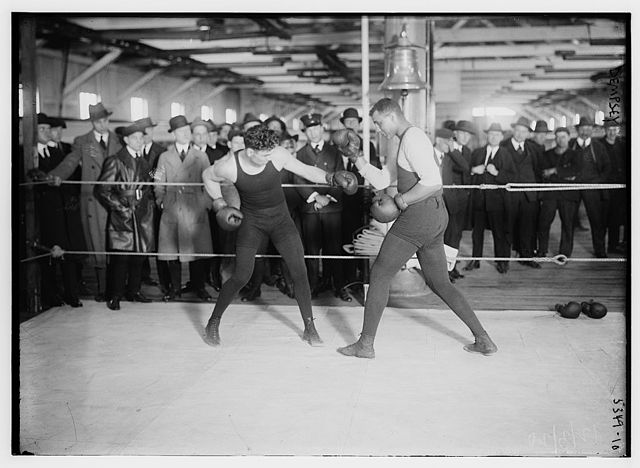
640px-Jack_dempsey_ring_loc_50497v.jpg
Colleges and local communities often have events and clubs focused on a specific region or nation of the world. Chinese American Club, Asian American clubs, Filipino Culture club, and many others are just a few examples. Sports clubs might tailor themselves around a specific nation’s sport, including Sumo or Escrima or boxing and martial arts. These are good areas to check out and connect with similarly interested people. It offers some of the same benefits as the language learning clubs and culture organizations, in that sharing community with people interested in some of the same things makes the experience much more enriching.


Media and Film

Popular media is another great way to experience a variety of aspects of your target culture. If the specific country has a film industry, seek these out on Amazon, Hulu, Netflix or other avenue that tailors to international films. I found that daytime Filipino dramas are highly popular, and stand up in passion and intensity with some of the best soap operas in the United States. Often, if movies or tv shows were released widely enough, there will also be subtitles (or dubbing) accompanying the original language, in English or your language. Watch them multiple times and see what aspects of the characters peak your interest, be it where they live, their profession, their mannerisms, their favorite food, etc.

512px-Riceburger.jpg

By CapnPrep via Wikimedia Commons
Fusion food culture in Asia: Rice-bun fast food (chicken?) sandwich,

Cook!

Everyone eats! Food and culture are intimately tied together. Food speaks to the region’s geography, culture and language. Search out recipes you’re interested in trying on the internet, or rent or buy a cookbook specializing in your chosen culture’s cuisine. Pick a leisurely day (often on the weekend) to shop and try out one recipe of your choice. Take the time to appreciate the different ingredients (maybe only available at a specialty market you may never have been to!) and the people who shop for the ingredients. Ask questions of your friends and family, if you are unsure about anything. Cooking not only helps you try the food of your target culture, but also connect in many ways with the past, as well. I happened to cook sinigang for the first time with a good Filipino friend in graduate school, and loved its strikingly pungent, vinegary goodness. The first time trying balut and dinuguan was definitely a culinary adventure, but I am so glad to have seen many sides of Filipino cuisine.
Dinuguan.jpg
By GracinhaMarco Abundo (Dinuguan) [CC BY 2.0 (http://creativecommons.org/licenses/by/2.0)], via Wikimedia Commons
My first time trying dinuguan (or dinardaraan in Ilocano) was in Daly City, CA. It was delicious after a long day of traveling. It had a very earthy, meaty texture and deep flavor, perfect with rice.

Take Action!

These are just a few ways we young, second through fourth generation, mixed parentage people can reconnect with a cultural heritage we may not have been able to experience as a kid. Maybe your family was like mine, and didn’t really practice or teach you much of their own culture. As a young person or an adult, you can feel a little closer to your grandparents and their parents by trying out a few of these tips.


Was there something I missed? Have you found something else that helps you keep connected? I’d love to hear about it!


Mabuhay!

Monday, July 20, 2015

Movie Monday: "John Adams" an HBO series by Tom Hooper

Portrait of VP John Adams


On the recommendation of history colleagues, I found a copy of the HBO Series “John Adams” at the local library, and I’m not disappointed. This historical drama follows the career and presidency of Founding Father John Adams, including his participation in the American Revolution and his activities in foreign arenas like France and Britain during the establishment of the American Government. This series doesn’t avoid the darker aspects of Adams’ experience, and seems to give a balanced view of his life.

Like many HBO series, the acting is on point. Lead Paul Giamatti brings this John Adams to life and reflects his educational background in theater and broadway. David Morse towers over the other characters as bigger-than-life General and President George Washington, and gives a subdued performance as the first leader of the new government. Laura Linney is an excellent Abigail Adams, giving life to the famous first Second Lady and second First Lady of the United States.

As the series opens, Adams (Giamatti) is a successful lawyer in Boston, with wife Abigail (Linney) and children John Quincy, Abigail and Charles. The cries of “Fire! Fire!” echo through his home as British soldiers fire upon a crowd of protesters to Britain’s overreaching influence in the colonies. Adams is the only lawyer in Boston willing to take the case, which opens him up to attacks and criticisms from his patriotic neighbors.

The benefit of a series such as “John Adams” is how human our founding heroes become when treated in a balanced manner. Putting aside the romanticism surrounding the founding of the United States, a student of history will appreciate the nuanced treatment. Additionally, the series does not marginalize the other key members among Founding Fathers (and Mothers), which can sometimes happen when a series focuses on one particular subject, or minimize their influence on the main character. The humanity present in this series brings the founding members down to a relatable level, in particular the balance between work and life, family, religion, and the fundamental principles of the United States.

What I found most instructive is how contentious the developing government of the United States was during the first few years. Every member had their own interests and concepts of who held what power, and the extent of that power over the individual states. As a newer student of early American history, I found these insights informative for future study. Additionally, the sheer weight of what was before the Revolutionary leadership, founding a new country, is not lost on the artists who changed the characters’ appearance based on circumstances. The various epidemics that swept the New England territories, coupled with the stress, play out on the faces of the actors throughout the series.

A viewer hoping to bolster their patriotic feelings will likely feel kinship towards the characters in this historical drama. Students of history will appreciate the perspectives of the film, and the contentious nature as more reflective of reality than the simple founding myths many of us grew up on. There is very little to fault in this series, from my perspective, as there was clearly enough financial support to give “John Adams” a suitable treatment.


Purchase or stream "John Adams" through Amazon

History Notes:

The differences between fact and fiction in historical drama (see historical inaccuracies)
Religion and political backgrounds of the Founding Fathers and others
Family life of John Adams
David McCullough's book "John Adams," inspiration for this HBO series

Tuesday, July 14, 2015

Movie Monday: "The Patriot," a film by Roland Emmerich


“The Patriot” is one of those films that might spark interest in American History for some, but eventually turn those same historians off for its portrayal of the American Revolution. At its core, “The Patriot” is both a war film and a historical drama about a war veteran who is once again called to sacrifice his peace for a greater cause. His response to the casualties of war sets up the tension that builds and releases throughout the film. The production values are rather good, something that is expected for a mainstream film with a leading actor like Mel Gibson. While not on the same level as Gibson’s earlier “Braveheart” in popularity, “The Patriot” does showcase Gibson’s ability to play a tortured and sacrificial character who gives up much for a greater purpose. While Gibson is inevitably the star of the show, Heath Ledger puts in a strong performance as Gibson’s son, Gabriel Martin. Gabriel is eager to join the Continental Army and fight for “the Cause,” while his father is much more tempered against jumping back into war. Jason Isaacs provides a convincing performance as the “bad guy” British Colonel William Tavington, who embodies much of what a man will do during war. Tom Wilkinson is Lieutenant General Charles, Lord Cornwallis, a military genius and tactician who nonetheless falls victim to his preconceived notions against militia and their capabilities. There are a few understated performances by both supporting actors Donal Logue and Joely Richardson as militiaman Dan Scott and Martin’s sister-in-law Charlotte Selton, as well.

When the film opens, Benjamin Martin (Gibson) lives an idyllic life on his farm in 1776 South Carolina, working diligently in his workshop, attempting to make a working rocking chair (a task he’s obviously failed at several times, judging from the pile of scrap). He is a widower, but he capably raises his children with the help of African American servants and laborers. This peace is shattered when an Assembly in Charles Town is called to debate the cause of Revolution. There are Loyalists among the Assembly, but the majority supports fighting against the British, much to the apprehension of Martin, who saw action in the North American theater of the Seven Year’s War. His two elder sons, particularly Gabriel Martin (Ledger), are eager to support the fight, feeling it is a man’s duty to fight for his home and principles. The first show of British brutality involves an interaction between Martin’s second eldest son, Thomas, and the British Colonel Tavington (Isaacs), and sets up the goal for Martin throughout the film.

Viewers are inevitably going to be entertained by this film’s classic hero’s journey model, which follows the formula of heroic hardship and resolution through growth to a T. The biggest issue history buffs will have is the rather simplistic representation of the Americans as “good” and the British as “bad,” a dichotomy which almost never exists as cleanly as is portrayed. When portraying a nation-state’s founding myth, however, it is often popular to show the founders as heroic patriots. Another interesting aspect is the portrayal of African American participation in the Revolutionary War, particularly in a fighting context. It may surprise some viewers to know that African Americans were promised the opportunity of freedom, as well as bounties in some cases, for participation in the Revolution, both on the Loyalist and the Patriot sides. Often these African American soldiers were also integrated into existing units, either regular Continental Army units or state militia units. While not portrayed in the film, African Americans also participated heavily into naval operations on both sides of the war.

Overall, this film does successfully portray one narrative that will entertain and, for some, build emotional response to the battle for the United States. The history is very thin here, as Martin is a composite character with no direct analog in history. The simplistic characterization of Americans as good and British as bad will put some off, particularly historians and history buffs familiar with the complexities of the historical narrative. The production itself is obviously well-funded, and the performances of the lead and many supporting actors was strong and capable, leading to a rather successful film, overall.

Final verdict: 3.5/5 for strong lead performances, good production values, but a lack of serious scholarship and a simplistic portrayal of the two combatant sides.

Purchase or stream "The Patriot" on Amazon.

History Notes:

The true motivations of both Patriot and British combatants
Ethnic relationships: African Americans in War
Military tactics and acceptable responses to captured soldiers on both sides
Idyllic portrayal of 1776 South Carolina, tied to ethnic relationships

Monday, July 6, 2015

Movie Monday: "Picture Bride," a film by Kayo Hatta

Department of Labor Picture Bride Documentation
Wikimedia Collection

Hatta, Kayo. "Picture Bride," starring Kido Yuki, Takayama Akira, and Tamlyn Tomita, 1995.

It was by chance I happened upon “Picture Bride” at the library and was moved to rent it. A riveting historical drama, "Picture Bride" depicts the life of a young Japanese immigrant woman working on the sugar cane fields in Hawaii during the early 1900s. It shows how both characters used deception to improve their chances of sealing the arranged marriage. Photography innovated the “picture bride” system that initially relied on written letters alone or face-to-face meetings. 

This film provides a solid script for strong performances that make the film particularly moving. Lead actress Kudo Yuki gives picture bride Riyo the emotional expressions that capture the apprehension and exhaustion a newly arrived city girl experiences under field conditions. Actor Takayama Akira ably expresses the hard life and defeatist mentality many bachelor field hands experienced under the Gentleman's Agreement of 1907 and prejudicial labor relationships. Finally, Tamlyn Tomita supports the leads with her capable performance as a strong young picture bride who must take on the roles of mother and mentor. One important aspect is that the cast are all capable Japanese and Japanese-American actors, a novel circumstance given the recent controversial casting choices in 2015 Hollywood.

When Riyo (Kudo) first arrives at the immigration office on the shores of the territory of Hawaii, she meets her husband for the first time, a field hand (Takayama) almost two decades her senior. This fact, not shown in the youthful photo he sent, sets up tensions from the start. The various hardships the two newlyweds face include prejudicial ethnic conflict with white overseers, labor conflicts with fellow Filipino field hands, as well as the appeal of gambling as a downtime activity. Couple this with the relationship built on lies and the film contains plenty of tension and conflict. The challenges these characters face will illuminate an almost forgotten historical exchange network that greatly disrupted immigration to the United States.


One of the strongest aspects of this film is the human element that makes it so relatable to a variety of viewers. Many of us can relate to the class challenges of trying to get ahead in a tough work and social environment, particularly when it seems like the paychecks are never quite enough. Viewers may relate with the ethnic conflicts that plague both historic societies and today. For me, this film made me realize how blessed I am in my own life, particularly the great physical toil these characters face each and everyday, and how they manage to find positives.


Overall, this film is a great peek into the historic condition of “picture brides” under the Gentleman's Agreement of 1907. Not only does it depict the ethnic conflicts Filipinos and Japanese field workers faced, but also the different ethnic hierarchies that native Hawaiians felt in relation to the Anglo landowners and European (Portuguese) overseers. While the film does slip into too much pathos at times, the narrative does manage to express an accurate depiction, perhaps less intense than some authentic experiences, of Japanese immigrants under an inherently prejudicial legal and social system. If you’re a fan of historical dramas, this may be the film for you. Please post comments or suggestions below, and what films you'd like to see reviewed in future posts.


Purchase "Picture Bride" or stream via Netflix here.


Historical Notes for discussion in the comments:

  • Ethnic interrelationships and labor: Anglo and Euro owners vs. laboring minority; labor vs labor between Filipinos and Japanese
  • Labor conflicts, the company store, $1 fee for lack of work, $. 65/day and $300 to go back to Japan
  • Asian, mainly Japanese and Filipino actors cast in the film, Japanese language used instead of English (think Sayuri/Memoirs of a Geisha)