Showing posts with label rural life. Show all posts

Monday, July 27, 2015

Movie Monday: "Last of the Mohicans" a film by Michael Mann, 1992

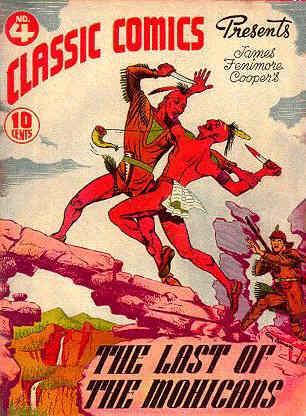
CC_No_04_Last_of_the_Mohicans.JPG

Last of the Mohicans (1992) a film by Michael Mann

I’ve held on to this film in DVD format for several reasons. Firstly, it is a good film that showcases quality actors and quality script that stands the test of time. Secondly, the price. $5 at a big box store. This historic drama tells the story of a quickly disappearing way of life, as two cultural worldviews come into conflict and inevitably arrive at an endgame where one side wins, and one side loses. Daniel Day Lewis plays the main protagonist, Hawkeye, an adopted white man frontiersman based on novelist Cooper’s character Natty Bumppo. His adopted father Chingachgook, played by Russell Means, who did not start his acting career until he was in his 50’s. Wes Studi portrays Magua, enemy of Colonel Munro (John Maurice RoĆ«ves) and a main antagonist of the film. The casting embraces diversity with sensitivity towards actors of indigenous ethnicity.


The opening shows Hawkeye (Lewis) stalking a buck with his adopted father (Means) and brother, Uncas (Eric Schweig). After their successful hunt, they thank the spirit of the animal and thank him for giving up his life for their benefit. They hunt and trap for their sustenance, trading with the Dutch for silver, as opposed to the British and French custom of trading in “wampum and whiskey.” Their frontier world comes to an end with the war between Britain and France impacting their settler neighbors and friends, the Camerons, who participate in the colonial militia in defense of their homes and in (nominal) support of the British Crown. When the need to protect their homes from war parties conflicts with the needs of the British military, the militia and fort commander Munro come into conflict as to which needs are more important.


The emotional impact of the film is reflective of Mann’s style of film-making. As a director, he portrays the emotional side of the story and the human element in subtle, but engaging, ways. The source material, he said, was a wealth of information but not the be all for his inspiration.


"It's not a very good book," Mann said of Cooper’s original novel. He mentioned the novel comes from a landholding perspective, and “is almost a justification for a massive land grab…that the Euro-Americans will be a better steward of the riches that God bestowed upon American Indians. And that, of course, was not the perspective of American Indians. So the revision of history was one of the things I didn't care for in the novel.” This reflects the times, when many investors saw stewardship of the American continent as justification for their increasingly harsh treatment of indigenous Native American groups.


While the story is historic fiction, Mann captures existential human conflicts that many viewers can relate to. Duty to a greater cause vs freedoms and liberties, self-interest and the honor of the ethnic group are among a couple of the qualities explored in this film.


Overall, this is a capable film that succeeds in drawing the viewer into the characters. While a few scenes seem forced, or the dialogue a little stale, it does not greatly detract from the quality of the film and the actors. Daniel Day Lewis famously only ate what he killed, and learned the skills of a frontiersman to give a more capable performance as Hawkeye. Viewers will appreciate such attention to detail, even though it sometimes teeters on the cliche “white man saves the minority” narrative that comes with such films and Dances with Wolves or Avatar.


Purchase or Stream "Last of the Mohicans" via Amazon

History Notes:

Native American cooperative relationships with European powers
Nathaniel Poe's role as central or peripheral to events
Source material of the original novel and the 1992 film
historical fiction vs factual information


Monday, July 6, 2015

Movie Monday: "Picture Bride," a film by Kayo Hatta

Department of Labor Picture Bride Documentation
Wikimedia Collection

Hatta, Kayo. "Picture Bride," starring Kido Yuki, Takayama Akira, and Tamlyn Tomita, 1995.

It was by chance I happened upon “Picture Bride” at the library and was moved to rent it. A riveting historical drama, "Picture Bride" depicts the life of a young Japanese immigrant woman working on the sugar cane fields in Hawaii during the early 1900s. It shows how both characters used deception to improve their chances of sealing the arranged marriage. Photography innovated the “picture bride” system that initially relied on written letters alone or face-to-face meetings. 

This film provides a solid script for strong performances that make the film particularly moving. Lead actress Kudo Yuki gives picture bride Riyo the emotional expressions that capture the apprehension and exhaustion a newly arrived city girl experiences under field conditions. Actor Takayama Akira ably expresses the hard life and defeatist mentality many bachelor field hands experienced under the Gentleman's Agreement of 1907 and prejudicial labor relationships. Finally, Tamlyn Tomita supports the leads with her capable performance as a strong young picture bride who must take on the roles of mother and mentor. One important aspect is that the cast are all capable Japanese and Japanese-American actors, a novel circumstance given the recent controversial casting choices in 2015 Hollywood.

When Riyo (Kudo) first arrives at the immigration office on the shores of the territory of Hawaii, she meets her husband for the first time, a field hand (Takayama) almost two decades her senior. This fact, not shown in the youthful photo he sent, sets up tensions from the start. The various hardships the two newlyweds face include prejudicial ethnic conflict with white overseers, labor conflicts with fellow Filipino field hands, as well as the appeal of gambling as a downtime activity. Couple this with the relationship built on lies and the film contains plenty of tension and conflict. The challenges these characters face will illuminate an almost forgotten historical exchange network that greatly disrupted immigration to the United States.


One of the strongest aspects of this film is the human element that makes it so relatable to a variety of viewers. Many of us can relate to the class challenges of trying to get ahead in a tough work and social environment, particularly when it seems like the paychecks are never quite enough. Viewers may relate with the ethnic conflicts that plague both historic societies and today. For me, this film made me realize how blessed I am in my own life, particularly the great physical toil these characters face each and everyday, and how they manage to find positives.


Overall, this film is a great peek into the historic condition of “picture brides” under the Gentleman's Agreement of 1907. Not only does it depict the ethnic conflicts Filipinos and Japanese field workers faced, but also the different ethnic hierarchies that native Hawaiians felt in relation to the Anglo landowners and European (Portuguese) overseers. While the film does slip into too much pathos at times, the narrative does manage to express an accurate depiction, perhaps less intense than some authentic experiences, of Japanese immigrants under an inherently prejudicial legal and social system. If you’re a fan of historical dramas, this may be the film for you. Please post comments or suggestions below, and what films you'd like to see reviewed in future posts.


Purchase "Picture Bride" or stream via Netflix here.


Historical Notes for discussion in the comments:

  • Ethnic interrelationships and labor: Anglo and Euro owners vs. laboring minority; labor vs labor between Filipinos and Japanese
  • Labor conflicts, the company store, $1 fee for lack of work, $. 65/day and $300 to go back to Japan
  • Asian, mainly Japanese and Filipino actors cast in the film, Japanese language used instead of English (think Sayuri/Memoirs of a Geisha)


Friday, May 8, 2015

Film Review: Wang Xiaoshuai's Beijing Bicycle

 
By Scottmeltzer (Own work) [Public domain], via Wikimedia Commons
  Wang Xiaoshuai's film Beijing Bicycle covers a number of themes which other films within modern Chinese cinema tackle in various ways. The challenges brought about by change, modernity and commodities, the divide between the city and the countryside, personal relationships between classes and sexes, and the state of social structures within modern China are but a few. Taken on its own, this film is a powerful commentary on a number of institutions of modern China, but also focuses on the very human element of struggle.
  One theme which is apparent throughout the film is the challenge of rural migrants when confronted with urban living. As Barme says in the article “Bike Envy,” the film “portrays the young men and women from the country[...] as quiescent and dumb.” On a superficial level, the viewer sees Guei's character as weak in the face of adversity, in that he doesn't speak up when spoken down to. However, I believe a more sophisticated analysis coincides with Wright's view, namely that the silence of Guei, and to a lesser extent his older friend, reflects “his difference and wonderment at the city.” Furthermore, I would argue that it reflects the breakdown of communication between the two classes of “urban dweller” and “rural migrant,” in that the migrant will speak, yet no one will openly listen. It's as if the arguments would not only fall on deaf ears, but that the sheer fact that they are arguing the issues stems from an inherent characteristic of the “backward” rural population. This concept of the backwardness of rural workers segues into the concepts of stubbornness, which many people use to describe Guei.
  Stubbornness is a characteristic reflected within a number of characters within modern Chinese films, like Teacher Wei in Not One Less, or Qiu Ju in The Story of Qiu Ju. In Wang's words, the idea of stubbornness is what pulls the people through the challenges of city life. Furthermore, it reflects the harsh realities that rural people face when they move into the city. The fact that such a determined spirit is what is needed just to maintain a meager standard of living, namely for Guei to acquire and keep his bicycle and his job, reflects how stratified the economic systems have become between urban and rural areas. Similarly, we are left with questions of whether or not such a method for dealing with life is really productive. In Not One Less, the audience is left to wonder what the fate of the village chief will be, and how Qiu Ju feels about her experiences with the modern Chinese system of law. In Not One Less, the students are given new chalk, as well as some funds to (possibly) fix up the school and provide some new resources for their education. However, the audience is again left with a sense of incompleteness. Though they got a small donation, what of the rest of the time? Will the funding continue, or end when the story is no longer important? Like these characters, Guei's determination ended up getting him beaten, bruised, and his bike broken to pieces. However, it also allowed him to survive through the whole ordeal, and he did get his bike back. On the subject of the bike, the audience is left to wonder what the importance of the bike is.
  The bike represents some similar and different qualities which are important among the two boys, Jian and Guei. For Guei, the bike reflects his status in Beijing as a real resident, in that he has a job and he has some status among the urban dwellers. It further represents his livelihood, and a material good which he earned through his own hard work. Jian also uses the bike as a tool to gain status, among his friends and his girlfriend. Though he does push them away when he loses the bike, his status is severely decreased when he can't get it back. Both characters see the bicycle as a material possession, although they see it from different points of view. Additionally, the bike reflects Jian's desire to be associated with a pop culture, namely the X-Games style tricks on the bike. The materialistic and consumer society both characters face in another topic taken up within the film.
  Jian also treats his girlfriend as a material possession, completely ignoring her presence when in the arcade. In a way, both characters attack the perceived usurper of their material possession (with a brick). Guei attacks the thug who is destroying his bicycle, and Jian attacks the “Oakley Guy” who “stole” his girlfriend from him. The reflects both character's reactions to material culture, as well as their relationship to material goods. The commentary seems to be the attraction the youth have to material and consumer goods, whether it be for livelihood or entertainment. As we see with the characters of Unknown Pleasures, Jian seems to question what to do once he has all that he would want. When he is alone with his girlfriend, he attempts to get close, but can't seem to pull himself to make a move. Similarly, Guei is silenced throughout the film by the urban dwellers who challenge him. While not exactly reflecting his reactions to all his desires being met, it does reflect the arresting feeling he has at the new lifestyle.
  Beijing Bicycle was a challenging film to watch the first time through. I happened to catch it on the IFC channel long before attending this class, and didn't know what to make of it then. Now, with the benefit of practice at film analysis, as well as further knowledge of the kind of material the director wants to comment on, and the three-peat screening, I believe I have a good idea what the film was trying to say. I imagine further viewings will offer different commentaries, or a new discovery. But the film offers a great analysis of the challenges and changes happening within modern China.

Friday, February 27, 2015

Film Review: Not One Less, directed by Zhang Yimou


By chensiyuan (chensiyuan) [GFDL (http://www.gnu.org/copyleft/fdl.html) via Wikimedia Commons
Not One Less. Directed by Zhang Yimou, Columbia Tristar, 1999.
Zhang Yimou creates a film showcasing the society Communist China  developed during its career in power. In Not One Less, we are introduced to 13-year-old Wei Minzhi, who must substitute teach in a poor village when Teacher Gao is called to care for his mother. What follows is the challenges she faces, both in teaching students not much younger than her, and the journey she must make to find a student who has gone to the city in search of work.

Many commentaries are critical of its position in Chinese film, claiming it was made as a propaganda piece for the Communist government. What seems to be amiss here is the evidence against such claims, namely Zhang Yimou's many other films. Many, including To Live, contain many symbolic criticisms aimed at the Communist government, either during the Maoist Period or the Reform Period. Furthermore, a number of interviews with Zhang make several of his opinions of government policy known to the reader. It seems a mistake to think a film's meaning can be discerned from a superficial viewing.

Education plays an important role in the film, emphasizing the plight of the countryside's children, as well as acting as a criticism of the PRC's handling of rural reform. The film's focus on chalk shortages (representative of the wider lack of educational resources) as well as the fact that Teacher Gao has not been paid a salary for six months of working reflect the shortcomings of the government's reform plans. The cause of this, Xaoling's article claims, is the government policy where individual villages are responsible for funding the nine years of compulsory education for the area's children. In areas where money is already very scarce, there is little which can be done to raise funding for the schools. Symbols of this failed reform include the sign stating “Education is the Foundation for the Country's Prosperity,” which is plastered on a broken down wall, as well as the nature of the schoolhouse, which has no clock, and must rely on limited resources to survive.

Zhang represents the plight of the children by explaining the song Wei sings to Teacher Gao, then to her students. Though she forgets the official lyrics, her substituted lyrics hold important commentaries on the nature of the State's relationship to its children. Xiaoling comments that the official lyrics represent the State as the sunshine to the nation's “flowers”, or children. Wei Minzhi can never remember the correct words, which Xiaoling believes to represent Zhang's belief that the children would not see themselves as being cultivated by the State when it seems to have abandoned them to their fate.

The “happy ending” of the film shows the TV crew and cargo trucks driving out to the village, carrying loads of donations made by the city dwellers. As Xiaoling says, many viewers may say it's too Hollywood to be taken seriously. On the contrary, this reading doesn't reflect the true ramifications of such donations. What do the students do after the funding and donations run out? Will the city people still remember them, or will they believe they've done their good deed for the year? Upon closer inspection, the film actually is giving a critical commentary on the government, as well as the prosperous people's lack of awareness of the countryside conditions. In some ways it's like applying a bandage to a shotgun wound, treating the symptoms without addressing the main cause. We are left with a few statistics, claiming the reforms and charity have allowed 15% of students to return to school in the countryside. Xiaoling reflects on this, wondering what will happen to the other 85% of the students who won't return. Zhang wants the people to know that there is still much work to be done, most importantly in the way government reforms are carried out in the villages and the countryside.

National responses to the film are surprisingly mixed. What is most troubling is the rather superficial review given by a representative of Beijing Normal University, who claims the film “lacks a strong plot” and laments at how the ending's “happy laughter conceals harsh reality.” These comments reflect the divide between urban dwellers and the plight of the countryside. Furthermore, it represents the lack of understanding, in that the reader claims the superficiality of the ending, which seems to be Zhang's exact point. Other comments, however, reflect the awareness of the situation in the countryside, as represented in Zhang's film, however it also shows the lack of action of the readers. Thought many make the effort to write commentaries on the film, one reviewer tells how they should have written a report after seeing the poverty in the village. The instances of “should have” or “will next time” likely expands beyond one commentator's words. It is the hope that this film will open the audiences eyes to not only the plight of the poor, but also the need for critical government review.


Works cited: 

Xiaoling Zhang, “A Film Director's Criticism of Reform China: A Close Reading of Zhang Yimou's 'Not One Less',” China Information XV.2 (2001):