Showing posts with label film review. Show all posts

Monday, March 21, 2016

Hapless Historian Highlights!

Reworking the Writing
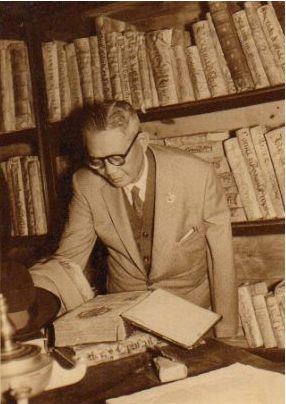
Antonio_abad.jpg
By Abadvibes via Wikimedia Commons
“Antonio Abad”

Here’s What’s Coming Up

In light of recent changes in my goals, I’m refocusing this space to highlight Fil-Am history, US history and my own reflections on these topics. Posts will come each Monday. This space will focus across the spectrum on articles, film and cuisine experiences I find interesting, and ones that may interest a few people who visit this blog.


Please let me know what you’d like to see in the coming weeks, as I am always looking for your perspectives!


In the meantime, here’s a few highlights from the past year or so. These are moments I liked and ones you might want to revisit. Feel free to comment or message me if you’d like to know more! Thank you for your time and continued support.

Hungry History Highlights

Hungry History: Filipino Arroz Caldo!! (Lugaw)

This is a lovely, savory rice porridge that I was introduced to in graduate school. It comes in powdered instant versions, but is not complicated to make with a good recipe. Like many Filipino recipes, this seems to be one where each family has their version. The key is good quality ingredients and knowing where you need to make adjustments for your family’s needs. Water and chicken broth can be mixed to adjust the sodium levels.

Hungry History: Sandwiches!!

I was always curious where the word “sandwich” came from, as I was curious about a number of words we use (did you know the English “typhoon” has Chinese and Persian origins?). Additionally, I was wondering about the short history of something as popular as the American sandwich, which has a place in nearly all of my generation’s sack lunches (does anyone use sacks anymore?). I also made a really yummy sandwich that inspired this post, pictured!

Hungry History: Spam Musubi!!

Surprisingly, I’d never had these Hawaiian specialities, even after my short trip to the Islands. I had always thought Spam was a mystery meat of questionable quality, but was happy to find it can be used to make something really yummy!

Movie Monday Highlights

Movie Monday: "The Patriot," a film by Roland Emmerich

Admittedly liberal in historical accuracy and heavy on emotional appeal, the star power of Mel Gibson, coupled with the patriotic (pun intended) narrative, makes the awareness of this film no surprise. While it goes out of its way to vilify the British, and does look favorably on the Rebels, it does reflect many ideals that our nation, including the belief than anyone, regardless of skin color, has an opportunity (albeit unequally) to make something of themselves. It is also entertaining as one of my “guilty” history-related pleasures.

Movie Monday: "The Mountain Thief," a film by Gerry Balasta, 2010

This was an eye-opening film for me, particularly as it relates to the Philippines. While I had come across poverty in my graduate research before, I don’t believe many films capture the sheer gap between haves and have nots as this one. It is undeniably real in its portrayals, and I’m so thankful it had English subtitles. As I mention in the review, I believe this film “should be required viewing for all college students, ‘first world’ citizens worldwide, and professed religious individuals who would seek to know and better the world,” so everyone can understand the side effects of political and economic inequality.

Proud Moment!

My Winning Submission: EDSA/People Power Revolution Essay Writing Contest

I’ve already posted this multiple times, so please excuse me, but it still stands as one of my more proud recent moments while working on this blog. The Bay Area Fil-Am community members were very welcoming and had nothing but positive things to say about my submission. I was thankful to share the stage with several key Fil-Am and Filipino community members, as well as many talented writers and artists from music and poetry. I’ve made professional connections and reconnected a little with my Filipino and Fil-Am heritage. Thank you all so much!

Here’s to the Future

I am excited to move forward with my blog project, and for the topics and writings I have in the works. I want to thank you for your ongoing support, please click “Like” and keep in touch on Facebook to help guide where the content goes from here. Thank you so much for your ongoing support!

Monday, January 11, 2016

Movie Monday: "Proud," a film by Mary Pat Kelly, 2004.

Public Domain via Wikimedia Commons

This film came to my attention through Amazon Prime, as it was recommended based on my searches for American History films. I am happy that I got the chance to see this film. The narrative revolves around the exploits of the USS Mason (DE-529) destroyer escort during WWII, manned by a nearly all African American crew at a time when the military was segregated. This American history narrative is not well known or explored outside specialty history courses at a select few campuses. Unfortunately, historical narratives are sometimes limited by the prejudices and norms of the time they're written, and the USS Mason's narrative is a casualty of this condition. It is only from the 1970s, 80s and 90s that "minority history" has gained more recognition in the mainstream historical narrative.

Films like "Proud" are useful for introducing the audiences to hidden narratives, and serves to peak interest in the respective subject matter. "Proud" has a good quality cast that captures both the triumphs and shortcomings of WWII society and military efforts. The racism is present, and real, but is not overly front and center. The narrative focuses not as much on what society believes these men cannot do, but shows how the men themselves respond to the conditions they are introduced to, both in the navy and in the war. I'll admit, I know little about the mainstream actors in this film, so I cannot adequately comment on their respective filmographies. On viewing this film, however, it seems like each actor brought their respect and efforts to bear in their characters. What I appreciate a lot about this docudrama is the use of actual primary source footage from the USS Mason's missions. I believe this supports the overall structure of the film, as a grandfather narrating his experiences and memories to his grandson and friends.

The film opens with one of the main characters, as an older man, narrating his experience in Harlem, and how it became a home for him and his family. His grandson is living with him, and invites his friends over to listen to loud music in the early morning hours. His grandfather is woken up and goes downstairs to tell them to turn that noise off, and how the living situation really isn't working out. This sets the stage for him to tell his story, and how recognition for their efforts has been a long time coming. He has not held on to anger about the slight, however, and this paints the portrait of one seaman's response to their prejudicial treatment. He says that if he had given in to anger and resentment, it would have justified "their" (white men in government, American society, all the doubters, etc) point of view of African Americans at the time.

This film is intriguing to me, as I admit knowing relatively little of the African American experience during World War II. My own research mainly centers on Asian American experiences during World War II, so I am thankful for having another perspective. While it is not surprising to see that prejudice reigned among sailors and government officials during this time, what was refreshing was how the film portrayed the Captain of the USS Mason caring for his crewmen within the context of sailors, not African Americans who happen to be sailors. Further, I was surprised at the treatment of the sailors on shore-leave in Northern Ireland, where the men welcomed them as Yankees first, not black men. The narrator states that he was surprised the crew had to travel all that way to be treated like Americans.

Any viewer interested in the lesser known, but well worthwhile, stories of WWII may like this film. While not perfect, it is a refreshing plot reminds viewers that Americans of all backgrounds fought against the Axis Powers. Whether viewers see too much patriotism woven in this story is largely left to the opinions of each individual, but it is hard not to feel a sense of national pride any time there is a war film. Hopefully, films like "Proud" will be shown more often in classrooms, if not necessarily for the raw historical accuracy, then to visually represent alternative stories for students not familiar with the role all Americans played in the Allied victory in WWII.

Stream or Purchase "Proud" on Amazon
Monday, July 20, 2015

Movie Monday: "John Adams" an HBO series by Tom Hooper

Portrait of VP John Adams


On the recommendation of history colleagues, I found a copy of the HBO Series “John Adams” at the local library, and I’m not disappointed. This historical drama follows the career and presidency of Founding Father John Adams, including his participation in the American Revolution and his activities in foreign arenas like France and Britain during the establishment of the American Government. This series doesn’t avoid the darker aspects of Adams’ experience, and seems to give a balanced view of his life.

Like many HBO series, the acting is on point. Lead Paul Giamatti brings this John Adams to life and reflects his educational background in theater and broadway. David Morse towers over the other characters as bigger-than-life General and President George Washington, and gives a subdued performance as the first leader of the new government. Laura Linney is an excellent Abigail Adams, giving life to the famous first Second Lady and second First Lady of the United States.

As the series opens, Adams (Giamatti) is a successful lawyer in Boston, with wife Abigail (Linney) and children John Quincy, Abigail and Charles. The cries of “Fire! Fire!” echo through his home as British soldiers fire upon a crowd of protesters to Britain’s overreaching influence in the colonies. Adams is the only lawyer in Boston willing to take the case, which opens him up to attacks and criticisms from his patriotic neighbors.

The benefit of a series such as “John Adams” is how human our founding heroes become when treated in a balanced manner. Putting aside the romanticism surrounding the founding of the United States, a student of history will appreciate the nuanced treatment. Additionally, the series does not marginalize the other key members among Founding Fathers (and Mothers), which can sometimes happen when a series focuses on one particular subject, or minimize their influence on the main character. The humanity present in this series brings the founding members down to a relatable level, in particular the balance between work and life, family, religion, and the fundamental principles of the United States.

What I found most instructive is how contentious the developing government of the United States was during the first few years. Every member had their own interests and concepts of who held what power, and the extent of that power over the individual states. As a newer student of early American history, I found these insights informative for future study. Additionally, the sheer weight of what was before the Revolutionary leadership, founding a new country, is not lost on the artists who changed the characters’ appearance based on circumstances. The various epidemics that swept the New England territories, coupled with the stress, play out on the faces of the actors throughout the series.

A viewer hoping to bolster their patriotic feelings will likely feel kinship towards the characters in this historical drama. Students of history will appreciate the perspectives of the film, and the contentious nature as more reflective of reality than the simple founding myths many of us grew up on. There is very little to fault in this series, from my perspective, as there was clearly enough financial support to give “John Adams” a suitable treatment.


Purchase or stream "John Adams" through Amazon

History Notes:

The differences between fact and fiction in historical drama (see historical inaccuracies)
Religion and political backgrounds of the Founding Fathers and others
Family life of John Adams
David McCullough's book "John Adams," inspiration for this HBO series

Tuesday, July 14, 2015

Movie Monday: "The Patriot," a film by Roland Emmerich


“The Patriot” is one of those films that might spark interest in American History for some, but eventually turn those same historians off for its portrayal of the American Revolution. At its core, “The Patriot” is both a war film and a historical drama about a war veteran who is once again called to sacrifice his peace for a greater cause. His response to the casualties of war sets up the tension that builds and releases throughout the film. The production values are rather good, something that is expected for a mainstream film with a leading actor like Mel Gibson. While not on the same level as Gibson’s earlier “Braveheart” in popularity, “The Patriot” does showcase Gibson’s ability to play a tortured and sacrificial character who gives up much for a greater purpose. While Gibson is inevitably the star of the show, Heath Ledger puts in a strong performance as Gibson’s son, Gabriel Martin. Gabriel is eager to join the Continental Army and fight for “the Cause,” while his father is much more tempered against jumping back into war. Jason Isaacs provides a convincing performance as the “bad guy” British Colonel William Tavington, who embodies much of what a man will do during war. Tom Wilkinson is Lieutenant General Charles, Lord Cornwallis, a military genius and tactician who nonetheless falls victim to his preconceived notions against militia and their capabilities. There are a few understated performances by both supporting actors Donal Logue and Joely Richardson as militiaman Dan Scott and Martin’s sister-in-law Charlotte Selton, as well.

When the film opens, Benjamin Martin (Gibson) lives an idyllic life on his farm in 1776 South Carolina, working diligently in his workshop, attempting to make a working rocking chair (a task he’s obviously failed at several times, judging from the pile of scrap). He is a widower, but he capably raises his children with the help of African American servants and laborers. This peace is shattered when an Assembly in Charles Town is called to debate the cause of Revolution. There are Loyalists among the Assembly, but the majority supports fighting against the British, much to the apprehension of Martin, who saw action in the North American theater of the Seven Year’s War. His two elder sons, particularly Gabriel Martin (Ledger), are eager to support the fight, feeling it is a man’s duty to fight for his home and principles. The first show of British brutality involves an interaction between Martin’s second eldest son, Thomas, and the British Colonel Tavington (Isaacs), and sets up the goal for Martin throughout the film.

Viewers are inevitably going to be entertained by this film’s classic hero’s journey model, which follows the formula of heroic hardship and resolution through growth to a T. The biggest issue history buffs will have is the rather simplistic representation of the Americans as “good” and the British as “bad,” a dichotomy which almost never exists as cleanly as is portrayed. When portraying a nation-state’s founding myth, however, it is often popular to show the founders as heroic patriots. Another interesting aspect is the portrayal of African American participation in the Revolutionary War, particularly in a fighting context. It may surprise some viewers to know that African Americans were promised the opportunity of freedom, as well as bounties in some cases, for participation in the Revolution, both on the Loyalist and the Patriot sides. Often these African American soldiers were also integrated into existing units, either regular Continental Army units or state militia units. While not portrayed in the film, African Americans also participated heavily into naval operations on both sides of the war.

Overall, this film does successfully portray one narrative that will entertain and, for some, build emotional response to the battle for the United States. The history is very thin here, as Martin is a composite character with no direct analog in history. The simplistic characterization of Americans as good and British as bad will put some off, particularly historians and history buffs familiar with the complexities of the historical narrative. The production itself is obviously well-funded, and the performances of the lead and many supporting actors was strong and capable, leading to a rather successful film, overall.

Final verdict: 3.5/5 for strong lead performances, good production values, but a lack of serious scholarship and a simplistic portrayal of the two combatant sides.

Purchase or stream "The Patriot" on Amazon.

History Notes:

The true motivations of both Patriot and British combatants
Ethnic relationships: African Americans in War
Military tactics and acceptable responses to captured soldiers on both sides
Idyllic portrayal of 1776 South Carolina, tied to ethnic relationships