Showing posts with label convenience. Show all posts

Wednesday, March 23, 2016

Hungry History: Amazing Adobo, Part II!

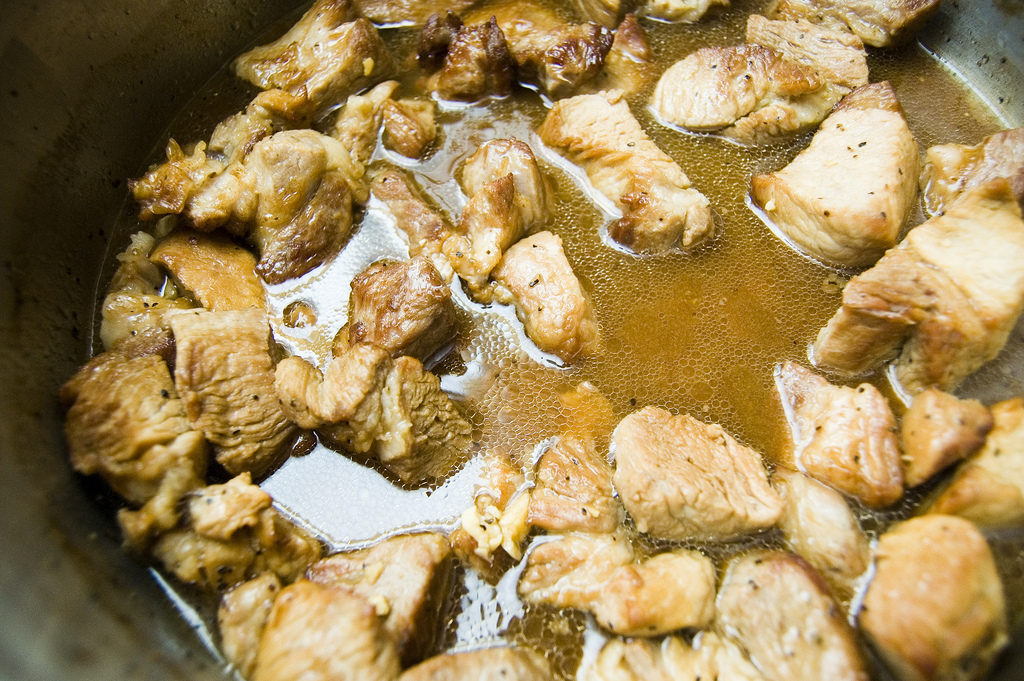
Philippine_pork_adobo_cooked_in_a_kawali.jpg

Succulent pork adobo, notice the specks of pepper and the richly colored broth. Diverse spices are often coarsely chopped and dumped into the pot ahead of (or during) cooking.


Fabulous Filipino Adobo In Fifteen Minutes Prep

Don’t Have Time to Cook

Like you, I have days full of commitments. I’m not always able to eat wholesome, home-cooked meals, even when I want to. When I cook, often it is staple meals that, while comforting, don’t always expand my food horizons. On a particularly full day, I might resort to take-out or fast food, which reminds me just how hard I have to workout to counterbalance. As with any busy life, the answer is seeing where you can simplify.


I Already Simplify

I know, I know. You’ve already made things simpler for yourself. Maybe you’ve been cutting out unnecessary web surfing or cut the cable. Maybe you’ve even trimmed your budget and adjusted your work schedules to better balance in your work and life (in which case, this is a great way to help that goal!). Even so, sometimes there’s just not enough hours in the day to do everything we want to do. Sometimes, our meals suffer as a result. Shouldn’t the wellness of our bodies, the only one’s we know we get, be a priority? We can accomplish this in the kitchen with the investment in one basic but powerful tool.


Slow Cooker: Save Time, Eat Well

Take the hard work out of preparing a fresh, fantastically Filipino staple with this simple process using a fantastic, dump-and-forget style of cooking...the slow cooker! Slow cookers are versatile kitchen tools that can make breakfast oatmeal, lunch soups and dinner meatloaf, without taking up much counter space. Read on to learn more about this method, its benefits, and a recipe that can help you create your own family-style adobo at home with just fifteen minutes prep!
Chef_Pepin_Oval_Slow_Cooker.jpg
By Chef PepĂ­n via Wikimedia Commons
Slow cookers are available at all big box stores and online retailers. Quality ones have more settings and temperature options to customize your cooking


Adobo Can Be Easy

Traditionally, adobo involves getting (or butchering!) just the right cuts of pork or chicken with a variety of veggies, spices and liquids, and boiling the mixture then letting it simmer for a few hours. Every family and every region in the Philippines has their own special recipe for their perfect adobo. With a slow cooker, you can skip the stovetop, and stove babysitting, and enjoy the full, home-style comfort flavors of this Filipino staple dish. Recipes abound, a quick Google search will give you so many ideas, but my favorite has a nice balance of Filipino vinegar (extra splash, courtesy of my Ilocano side!), soy sauce, garlic, bay leaves, pepper and a little seasoned salt. I also add potatoes and onion. You can definitely balance your favorite flavors, or adjust it for salt intake and other food considerations.

Exciting Meals with Big Benefits

512px-Chicken_adobo.jpg
By dbgg1979 on flickr (http://www.flickr.com/photos/dbgg1979/3880492441/) via Wikimedia Commons
Chicken adobo, bone-in for added flavor. Notice the bay leaves, they really make a difference! The drier skin is achieved by attentively searing the meat, allowing the broth to either cook out or reserving then readding a portion upon serving (depends on technique used).


Versatile
The beauty of Filipino adobo is that it is easily adaptable. There’s no “right” or “wrong” answer (though many families claim theirs is the best!) You can adapt the basic recipe provided here to suit your family’s needs. Try a robust vegetarian option, substituting your favorite stew-friendly, meaty vegetables. You can also adjust ingredients for food allergies (even soy, some recipes don’t have it!), protein preferences and levels of salt, sour and sweetness. Try experimenting and see which flavors work best for you and your family.


Easy
It takes more time to watch a daytime tv show than it does to prep this meal! Fifteen minutes means a home-cooked meal at the end of your busy day! Your home will also smell divine! Make sure to get all your ingredients and cutting surfaces, pots and utensils set up beforehand, and you save even more time! Just prepare the meats and vegetables, the marinade and preheat the slow cooker. You can safely leave it on throughout the day without threat of overcooking (follow your own slow cooker manufacturer’s instructions).


Nearly Foolproof
Because the slow cooker uses very low, slow heat, there’s very little that can go wrong with this dish. The important thing is to use the right cuts of meat, with a little fat in them, to ensure the protein doesn’t dry out. Also, cut your vegetables and meats to roughly the same size, or adjust, to ensure everything cooks properly. The recipe below provides more than enough soup to pour over the rice and avoid burning during cooking, but if adjustments are made you may want to check the pot occasionally.


Delicious
There’s many reasons Filipino adobo is one of the Philippines’ unofficial national dishes. One is...it’s delicious, in all its variations! Give your taste buds something a little different. Trying new things is one of the spices of life, and if you haven’t tried Filipino adobo before, you’ll be pleasantly surprised!


Low Cost
One of the benefits of using a slow cooker is the fact that you can safely use less pricey cuts of fattier protein (my favorite are chicken thighs, bone-in, and pork rib meat), which means dollar/pound savings at the grocery store. You can also adjust the recipe to make as little or as much as you need. It’s only limited by the size of your budget, your appetite, and your slow cooker. Contact me with your comments or to learn more about making simple Filipino meals at home! Mabuhay!

Try one fantastic recipe for slow cooker adobo here.

Wednesday, May 27, 2015

Student Success: Dress for Success

There is a reason many organizations make sure their recruits keep their uniform clean and pressed.


wikimedia collections

These people are all ready to work. In addition to their hours of training and preparation, as well as their careful care in manner, these people prepared their uniform for their profession.

You, as a student or early professional, can harness this ability by keeping your wardrobe clean and updated. By cleaning your clothes regularly, and ironing if you are so inclined, you actually change the mindset you take into the world. When you're clean and prepared with your uniform, you're clean and prepared in mind for success.

When you're cramming for exams or looking to a long lecture with in-depth notes, dressing for success can change your whole mindset and give you the edge to push towards that job or that A.
  • Dry clean items that require dry cleaning, look for coupons or discounts for students, or ask the attendant if they give discounts for interviewees (you never know, they may be amenable)
  • Keep your undergarments clean...please! The lingering odors from sweat and other things will cut through a nice uniform every time. Don't let it sabotage your chances, keep 'em clean!
  • Iron: check the labels on your garments, if they let you, learn to use that iron and make a habit of it! Not only will it make you look sharper, but you'll learn a new skill you can take with you.
  • The importance of morning and evening routines. Making it habit will keep you honest when things hit the fan and you risk cutting corners.
These are just a few things you can do to keep yourself clean and prepared for the day. Dress for success and you'll enjoy a better mindset to take on those challenges. To learn more, check out these informative articles at the Art of Manliness (for women, too!): Sharp Dressed Man ; Daily Routines and You

Wednesday, May 13, 2015

Student Success: Keeping Yourself Clean

This might seem basic, but with many new freshman being out on their own for the first time, it needs to be covered as a fundamental part of success in a school environment. Keep yourself clean.

Keep Your Self Clean!


There's a lot of stress associated with being in a new environment, be it educational or professional. In order to present the best possible image to potential colleagues and professors, students should regularly clean.

      By Miguel Andrade (Own work) [Public domain], via Wikimedia Commons

      Shower: if you find yourself particularly busy in your first quarter in your new school environment, shower at the end of the day to make mornings easier. Not only will your bedding remain cleaner, but you can wake up, wash your face, brush your teeth, put on deodorant and be out the door. Which brings us to the second point
Russell Lee [Public domain], via Wikimedia Commons

Face-washing: Each morning, use a mild face cleanser to clear away accumulated dirt and refresh yourself for the day ahead. Products by Clearasil or Neutrogena are easy to find and reasonably priced, or many of Target's generic products will also do the trick for less.

By Mennonite Church USA Archives (Flickr: Kindergarten, Stanfield AZ) [Public domain], via Wikimedia Commons

Brushing: Your breath is ripe in the morning, brushing your teeth helps take care of this. It is best not to brush right after you eat, as the natural saliva created while eating can actually help protect your teeth. If desired, one can also follow brushing with a mouthwash, although it may require you not eat for about fifteen minutes after.

By Loico (Own work) [Public domain], via Wikimedia Commons

Deodorant: This is not optional. During the day, you're going to sweat and your fellow students will appreciate this step. Ditch the Axe Body Spray of your high school youth and go for a scent more appropriate for a college student (Old Spice is one of my favorites for musky, traditional aromas, Dove or another mildly scented stick also works)

While this list is certainly not exhaustive, doing these few fundamental things will do wonders not only for your demeanor when attending class, but for your general well-being and mental health. This is a new chapter in your professional and academic career, make the most of it by taking care of the basics. Keep yourself clean and sharp!

Monday, February 16, 2015

Hungry History: Filipino Arroz Caldo!! (Lugaw)


By Robert Colinares (www.filipino-food-lovers.com) [Public domain], via Wikimedia Commons

Filipino chicken and rice stew! Sort of...


Arroz Caldo is a Spanish-influenced rice soup of Chinese inspiration, consumed by Spanish colonials who settled in the Philippines. An easy to digest food, it is often given the people who are sick or the elderly, as well as those in cold climates, due to being warm and flavorful.

Varieties of scrumptious ingredients depend on the specific region and individual preference of the preparer. Fried garlic and scallions are traditional ingredients in lugaw, the Tagalog term for this dish. Ginger, a favored ingredient in another Filipino favorite, adobo, is also sliced and boiled in the chicken or fish broth. Diced tofu, pork, beef cuts, soy sauce, calamansi, and black pepper are also flavorful ingredients in some variations. Try a taste of Cebu by adding Chinese sausage, bay prawns, bay leaf or olive oil, according to your specific recipe.

By Ramon FVelasquez (Own work) [CC BY-SA 3.0 (http://creativecommons.org/licenses/by-sa/3.0)], via Wikimedia Commons

Northern provinces in the Philippines, particularly Ilocanos, tend to prefer the Spanish-inspired arroz caldo to lugaw, though it seems to mainly be a difference of ingredients. If you want to switch up your chicken soup when you're feeling cold or otherwise hungry, next time try this recipe for arroz caldo and have a taste of the Philippines in no time!

Monday, February 2, 2015

Hungry History: Spam Musubi!!


Hawaii-Asian-American food at its finest!

Combining some of the best aspects of American modern food miracles and Japanese sushi rice recipes, Spam Musubi merges the umami of rice vinegar infused short-grain rice and nori (dried seaweed) with the sodium-rich protein goodness of Spam into a snack worthy of any lunch-box.

Spam's history dates to the World War II military bases in Hawaii, where soldiers' main protein rations consisted of canisters of Spam. Due to the prevalence of this canned wonder, Hawaiians began incorporating Spam into island recipes. The Japanese communities in Hawaii can be credited with fashioning Spam musubi, inspired by Japanese omusubi with more traditional Japanese ingredients.

Variations exist that incorporate such ingredients, including Japanese furikake (dried ingredients for mixing into rice) like egg, salmon, sesame seeds, and flavored nori. Additional ingredients for musubi include Japanese chicken katsu (fried cutlet) and hot dogs.

Depending on the individual variation desired, chefs may opt for Hormel's slightly healthier variations of Spam, including their 25% less sodium variation, turkey variation, or "lite" variation, used in the recipe prepared above.

The Spam of choice is marinated in a soy-based sauce, sometimes flavored with sugar or vinegar, then grilled or baked until slightly dry (I used 350-degree oven for ten minutes). Cooked rice is mixed with rice wine vinegar and layered on dried nori to desired thickness. Sliced Spam is then layered on rice with a desired sauce, including but not limited to Hawaiian or Japanese style katsu sauce, Japanese mayonnaise, or soy sauce.

These snacks can be wrapped in plastic wrap then stored, as Spam Musubi can be enjoyed hot or cold.

This recipe from Allrecipes should get you started, but the beauty is making it your own with your own flavors. Don't be afraid to experiment!


Monday, January 26, 2015

Hungry History: Sandwiches!!

Honey Whole Wheat Toast with Butter, Sun-dried tomatoes w/ olive oil, pepper jack cheese, salami, sliced turkey breast with balsamic-vinegar tomatoes and spinach

From peanut butter and jelly to turkey-avocado, Reuben sandwiches, and Philly cheese steak, we've all had one or two sandwiches we love. Today we're going to explore a little of the history behind the development of the sandwich.

The namesake is thought to come from John Montagu, the 4th Earl of Sandwich, because of his credited creation of this highly portable food. One story states that the Earl was in a terrible hurry and, as was common at the time, instead of eating the entire meal on a "trencher" or stale piece of bread, the Earl "wrapped" the meat and vegetables in the folded stale bread and ate on the run. Another states that he wished his valets to serve his food in such a manner because he wanted to continue playing cards and other hobbies without greasing his fingers or the playing cards.

Sandwich-type meals have been around for many generations, and are widely consumed in as diverse parts of the world as the Middle East, where Jewish individuals use unleavened bread with meat and various vegetables, to the common use of Naan-style bread in India, eaten most often with curries and other dishes. Also falling under the definition of sandwich are the various sweet versions like chocolate-cream sandwiches and ice cream sandwiches.

The Wall Street journal, going along with the Earl's claim, states that the sandwich was Britain's "biggest contribution to gastronomy."

Though the concept of the sandwich is rather easily understood among most globalized citizens today, there was a curious court case in Boston surrounding the legal definition of the sandwich. The story goes that a court in Boston fashioned a legal definition for the food due to a non-compete clause of a shopping center which already contained restaurants serving tacos, burritos, and quesadillas which, some argued, could be construed as a sandwich type food. The court found that these styles of food differed particularly because they do not utilize two slices of bread, but generally one tortilla. More information on the court case can be read here.

For more on sandwiches generally, the above link to the Wikipedia article is informative.


Monday, January 12, 2015

Hungry History: Convenience Food in the US

Cans, TV dinners, jarred preserves, box meals. All are examples of convenience food we often associate with today's grocery stores.

These types of meals have origins, partly, in most worldwide agricultural settlements where preservation and portability were required. One example, the Aztecs, shows that warriors and scouts often carried meals that required only the addition of water for easy transport and storage.

The 19th Century in the US brought innovations in packaging, particularly the viability of canning. Although canning had been around as early as the 1850's, the ability to make cans on a larger scale came about when machines allowed low-skilled operators to replace specialized tin workers in the manufacture of large-scale product quickly.

The ability to freeze food, particularly the innovation of refrigeration and refrigerated trucks, brought frozen meals and frozen veggies from across the world to the grocery cart of populations throughout the country.

A particularly important vehicle for the development of convenience foods was the experience of US military personnel in World War II. Required to survive, and fight, in often harsh, remote conditions, these soldiers required not only hearty meals, but shelf-safe packaging with easy preparation, often with just water. As the soldiers returned, the technology they utilized became adopted in the market. Private firm factories once dedicated to the manufacture of packaged goods for military use transferred their machinery, and advertising budgets, to marketing these same goods to the general public. The legacy of these convenience foods in the 1950's and beyond survives in our grocery stores as divergent products and crackers, cookies, snack bars, instant noodles, processed pasta and rice dishes, cereals, and a wide variety of other goods.


This meal pictured here showcases a prepackaged microwavable rice dish, including dehydrated peas and carrots with a powdered flavoring, frozen cut corn, and packaged smoked sausages browned on the stovetop and served on top. Alongside the food is a packaged lemonade flavored drink.

By 221.20 (Own work) [Public domain], via Wikimedia Commons

A personal favorite convenience food comes from Japan, their innovative packaging for onigiri (rice balls) ensures the nori (seaweed) stays crisp while the sushi rice and filling remains moist and delicious!