Showing posts with label ethnic relations. Show all posts

Monday, April 25, 2016

Movie Monday: "Cats of Mirikitani," a film by Linda Hattendorf, 2006.

I saw this documentary several years ago and then rediscovered it again this last weekend. The messages of this film, for me, stand as an important reminder not only of significant events in American history, but also as a mirror for our preconceived notions on the stories of the countless homeless.

The film takes place mainly in Manhattan over the course of a couple years, beginning in late 2001. Tsutomu Mirikitani lives along a wall near a Korean Market on McDougal and Prince Street, creating artwork each and everyday. His mobile studio includes pens, crayons, chalk and paints, and his canvases include cardboard and scrap paper. With the events of September 11, 2001 breaking around him, he continues doing what he does best, creating memories through artwork. Shortly after 9/11, Ms. Hattendorf invites Mirikitani to stay with her for a period of time, to avoid the choking dust and debris still permeating the air around the World Trade Center site.

Over the course of the film, Hattendorf uncovers more and more details of Mirikitani’s life, including his birth in Sacramento, California and experience growing up in Hiroshima City, Japan. He returns to the US shortly after the opening of World War II. In his early twenties, and as a lawful US citizen, Mirikitani entered Tule Lake Internment Center in Northern California, where he signs a government document revoking his US citizenship. The film follows not only the story of his relationship with his new friend and documentarian Ms. Hattendorf, but also unveils some of his backstory that led to living on the streets in NYC.

The important messages of this film not only center on the plight of the mobile homeless, which continues to be an issue for social services nationwide, but also a reminder of the dark times in US history and of justice deferred. Far too easy to dismiss the internment of Japanese American citizens during WWII as history and not applicable today, one need only review the rhetoric of political demagogues against our Muslim citizens to realize such events could repeat themselves. Mirikitani expresses his anger and lingering, seething disgust at the events of World War II, and memorializes his experience in the internment camps through his artwork. He neither asks for nor wants anything from the US government, even as Ms. Hattendorf and her team work tirelessly to recover Mirikitani’s citizenship information and secure more public assistance for him in his advanced years.

The latter part of the film is lovely, as Mirikitani and Hattendorf slowly bring his story into the present moment, and realize that he is not alone in this world. Over time, family members are found and Mirikitani sees opportunity to work past what happened, and truly begin to see his life in the present moment.
Nancy Wong via WIkimedia Commons
"Janice Mirikitani in front of the International Hotel in San Francisco, January 1977"

The film is not always easy to watch, particularly at moments when Mirikitani’s cantankerous attitude aims at the filmmaker. I sometimes felt like Mirikitani didn't appreciate some of the kindnesses the filmmaker expressed, but after realizing his long history of being outside normal social channels, I feel more kindness towards his perspectives. Even though he sometimes criticizes the filmmaker’s decisions, once reprimanding her when she goes out to a movie and comes back to her apartment far later than expected, he does so because of worry and care for the young woman. Other moments legitimately made me tear up a little, particularly when the film explores recollections of the camp experience and of lives lost.

I encourage everyone to check out this film when given the chance. It is rather short and moves along at a good pace. It successfully introduces audiences to one story that helps humanize the events against Japanese American citizens during WWII that may only be known through textbooks. It also humanizes the ongoing social issues surrounding homelessness and our own personal notions of just who the homeless are.

Purchase "The Cats of Mirikitani" via Amazon

Thursday, March 10, 2016

My Winning Submission: EDSA/People Power Revolution Essay Writing Contest

EDSA/ People Power Revolution Essay Writing Contest, sponsored by Philippine American Writers and Artists (PAWA) Inc and the Philippine Consulate of San Francisco


To My Grandparents,

How did you feel when Marcos’ government fell in 1986? What went through your mind when you heard the news? Were you happy that a regime that took so much from the people was gone? As Ilocanos, were you upset that a man who began with big promises for the people was unfairly slandered by opposition forces and unlawfully deposed? Were Ferdinand and Imelda your John and Jackie Kennedy? Were the people right in their revolution? What did your families say when they sent letters, or did they mostly ask for money? I wish I had asked before you went to God’s side. I knew of you, and spent time with you, but never had the chance to really know you. I was so young, and knew nothing of death. I felt you would be around for a long time.

I wish I could have asked you about your life in the Philippines. As a young child, I never learned about our Filipino culture and our Ilocano language. Now that you are both gone, I’ll never be able to recapture your unique stories. As an adult, I can now read about the conditions Filipinos faced in early twentieth century America. Having read America is in the Heart, I can imagine a little of what you, lolo, went through on your journey to Hawaii and California. Did you, like so many pinoys, come to the United States in hopes of a better life? Did you see so little opportunity in your home that you felt a long voyage across the sea would open the doors for your success? What made you decide to purchase one hundred acres of Central Coast farmland with your brothers? How were you able to purchase the land, at a time when Filipinos were still looked at with suspicion and prejudice? So many questions, and yet so few answers.

How did you feel about your children? Were they raised to be wholly American, with so little expression or knowledge of their Filipino heritage? I know among many immigrant parents it was better to cultivate the American culture, in order to assimilate more completely, and draw less attention from the government officials who tried to expel “illegal” workers and “lawfully” exclude Filipinos from free access to all being an American national meant. Were you proud of your children? Did you feel, as so many parents do, that there was more you could have done to make them even more successful?

How did you feel about me? A third­-generation Filipino American with so little knowledge or cultural ties with our family’s Filipino culture. A young person who must rely on books, secondhand stories, and friends’ families to learn anything about our Philippines. Who knew so little that, prior to this assignment, didn’t even know what the 1986 People Power Revolution referred to? I knew who Ferdinand Marcos was, but only as a dictator who styled himself a political playboy. I knew of Imelda Marcos’ shoes.

How can I recapture that narrative which, through my and my parents’ upbringing, was so quickly lost within two generations? While I feel so blessed to have unrestricted access to a wealth of virtual resources I can use to study our culture, they are not you. They are not your individual stories. How can we; young, third and fourth generation Filipino Americans with, at times, so little connection with our Filipino heritage, recover a lost history that’s so often ignored in our American and World history courses? We must ask questions and take action.

Would you, our manongs and manangs, be proud of where we have come? We have a TV show that depicts a Filipino American family sitting down to Thanksgiving dinner without over-­the-­top stereotypes. We fought to rename a high school after two of our most prominent, but largely forgotten, labor union warriors in Larry Itliong and Philip Vera Cruz. We produced a documentary that introduces so many of our own to the fight in Delano, and its role in the great labor battles of the twentieth century. We’ve done much but, like those who came in support of their personal values and rights as citizens on the Epifano de los Santos Avenue, there’s still much work to be done. Neither the Filipino people or we are truly free of the status quo.

Ours is not a physical conflict against an individual regime or tyrant, but a cultural struggle against anonymity in history and invisibility in society. Our conflicts are not waged in revolutionary language with great public displays, but with a quiet determination in the halls of government and behind our cameras. In speaking with you and your children, and telling or retelling the story of our people, we honor our culture and those who fight for their beliefs. We are the offspring of Filipinos, but we are also Americans. Our charge may not be to overthrow a government, but like the Revolutionaries we must change minds and hearts of others who do not know about us. We must save our cultures from disappearing into the shadows of history, lest we ourselves forget. We owe our lives to the sacrifices of men and women like you, lolo and lola. Without you, I would not be here, able to enjoy the benefits of this great country. I hope our young people are up to the challenge of honoring the lives of our grandparents and great-­grandparents, and honoring the spirit of those who fought for a better life for themselves and their families on the EDSA in 1986. Though we are in different arenas, we both fight for our right to relevancy and visibility in our national stories.

To my grandparents, I hope I made you proud. I wish we had had more time to get to know each other, and share our stories with family and food. I look forward to showing you more about my life when I see you again.

Love,
Your grandson

See Positively Filipino Magazine's article on the contest here.

Monday, January 25, 2016

Movie Monday: "All for Liberty," a film by Chris Weatherhead, 2011.


[Public domain], via Wikimedia Commons

Sometimes it is not the most flashy or well-funded films nor, even, the story itself that is significant in a film. Part of the charm, perhaps, of historical dramas are that the filmmakers use creative license to create a coherent narrative, grounded in historical source material. All for Liberty is not a high-budget film, nor does it really stand up to modern Hollywood conventions, despite being released in 2011. This film depicts the struggle for Independence during the Revolutionary War, and centers on little known Henry Felder, a Swiss-German colonist who settled in South Carolina and participated in the war, alongside his family.

Felder is capably acted by descendant Clarence Felder, who brings his obvious passion for the story into his performance. Actor Felder's stage experience is clear as many acting techniques (which look overdone on film) are more suited to the limitations of live stage than film.

The film focuses on several events from Felder's life, including his writing of the Articles of Separation from the English King c. May 1776. There are several scenes of skirmishes with British forces as they advance through the South, and the film closes with the surrender of Cornwallis.

So little, outside the regional histories, is known about Henry Felder, and the fact that the screenplay was penned by a descendant brings some historical aspects of the film into question. As a viewer and a student of history, sources like this film become problematic without supporting evidence. Further, one must question the facts based solely on one point of view. For me, however, this is not the most significant aspect of this film. My favorite part of the film is actually the last ten or so minutes, as the dialogue shifts to a kind of "concluding paragraph" that asks the viewers to seek out information on those who are not celebrated in the historical narrative, and learn about the common men and women of historical events. Unfortunately, this is not always possible because sources often say little about the "little people," those who supported the heroes and folklore legends of history. This, for me, is the strongest lesson from this film. There is never just one man or one battle that created history, but a total narrative that covers the leaders and the followers, the logistical people, the "little people."

This film is not "good" in the traditional sense, and I often found myself looking at how much longer the movie was. It relies heavily on the story of Felder and even the battles, while more dramatic than most of the movie, are not the center of the story. Perhaps that, too, is a strength in disguise. Battles, while having a place in history, cannot be the only picture, so having a film focus on the people is refreshing. The acting quality is sporadic, and some actors seem miscast or caricatures based on a cursory investigation of a "common" 1770s colonist. The narrative also doesn't go much into the complex ethnic relations, mainly between Africans and Anglos. The film also only gives a simplified look at Anglo-Native American interactions, although does recognize that the Anglos were "inevitably" going to take over (of which the Native American character stoically nods). This film is not a documentary, although the longer expository voice-over narration gives that feeling. Nor is this film concerned so much with historicity as it is with telling Felder's story.

This film is a project of love, as Clarence Felder obviously appreciates the role of his ancestor in the Revolutionary War. Some viewers will be intrigued by the story and hopefully will be moved to investigate the lesser known stories lost to history. This is my hope for viewers of this film, that their curiosity will bring them to more interesting historical tales. Others will be deathly bored, and honestly I had my moments. The dubious origin of the screenplay, the romanticized relations between Africans, Native Americans and some Anglos (while existent, was not as equal as the film would have viewers believe), and the focus on a single man make the historical value rather weak. Nevertheless, the call for viewers to investigate the lesser known aspects of history is the single strongest message to come from a film recently, in my opinion. This film doesn't demand that we take one story to be the only story, and "official" version of history, and that, to me, is priceless.

Stream "All for Liberty" on Amazon Prime.

Monday, January 18, 2016

Movie Monday: "Selma," a film by Ava DuVernay, 2015

Yoichi Okamoto [Public domain], via Wikimedia Commons

Films that depict historic events often come with the necessity of literary license in the specific content of the film, either because there are gaps in the historical record or the success of the film relies on dramatization. Much has been said about the film Selma, and I am happy to have seen it on Amazon Prime. This historical drama depicts the events of the Civil Rights Movement that lead up to the march to Montgomery and, eventually, President Johnson calling for the Voting Rights Act of 1965. What members of the various movements endured, the struggles and challenges not only from Southern whites favoring the status quo, but the doubts that arose in their own minds, and I love that about film.

The film showcases the acting abilities of a variety of quality actors, including David Oyelowo, who depicts Dr. Martin Luther King Jr. Tom Wilkinson ably commands the screen as both a talented actor and an embodiment of President Lyndon B. Johnson. Carmen Ejogo shines as Coretta Scott King, and was personally approved by Ms. King to portray her in the film. Tim Roth brings his acting abilities to bear as Alabama Governor and (at the time) unashamed segregationist George Wallace, who also memorably stood at the doorway of the University of Alabama's Foster Auditorium as the college was desegregated by law. I believe the casting was very carefully done, as no major faults in delivery or quality exist in this film for me.

The film opens with two events that shape the flavor and nature of the Civil Rights Movement. First is the image of Dr. King (Oyelowo) receiving the Nobel Peace Prize in 1964. This is paired with scenes of the 1963 KKK bombing of the 16th Street Baptist Church, which left four children dead. The circumstances and context for the film are set up early, with a scene where Annie Lee Cooper (played by Oprah Winfrey) is denied the right to vote by the white registrar in Selma (although legally African Americans were afforded the right to vote, the decision of "fitness" for that right was largely left to individual registrars who, in the South, set up arbitrary, impossible questions and conditions for applicants). These events set the stage for the Civil Rights Movement's various organizations (including the Southern Christian Leadership Conference (SCLC) and the Student Nonviolent Coordinating Committee (SNCC)) to respond with different tactics and philosophies, both of which are touched upon in this film.

One of the most important outcomes of films like Selma, that moves beyond their occasional lack of historicity, or absolute historical authenticity, is that audiences are reintroduced to significant events in history. My hope is that viewers will explore the fight for civil rights as conducted by King and others on their own, while also realizing that the fight is not yet won. Selma and other films like it are, at their core, films about American identity, but also what it means to be part of the human species. It calls us to recognize the inherent worth in ALL people, regardless of race or religion.

The great tragedy of the events in this film is, while some creative license is taken when interpreting individual characters or their thoughts on Civil Rights (most critical was the portrayal of President Johnson as a reluctant supporter of Civil Rights when, from the documents, Johnson was a firm believer in King's mission), the core events, murders and prejudicial treatments of African Americans is true and largely uncontested. Anglo American supporters of the Movement were often branded "white niggers" and brutally attacked and murdered. African Americans who peaceably protested the systematically unfair treatment were imprisoned by their government, and spit on by their neighbors. Dr. King was assassinated.

American civil rights are an ongoing fight, and not only for African Americans, but all ethnic groups. Civil rights for African American populations are also at the forefront of current events, with murders of African American suspects plastered all over the headlines of the national media. Though we as a country have come a long way since 1965, Americans must all look to their consciences and continue to question just what values will be carried forward into the future, not only for the country itself, but for international relations and human rights, as well. The eyes of the world are always upon us, are we acting in a way to warrant such attention? Selma is a great introduction for further exploration of what the Civil Rights Movement in the US meant to the development of our yet imperfect Union.

Stream "Selma" on Amazon Prime.

Monday, November 16, 2015

Movie Monday: "The Mountain Thief," a film by Gerry Balasta, 2010

By Kounosu (Own work (own picture)) via Wikimedia Commons

"The Mountain Thief," a film by Gerry Balasta, 2010.

There are always a few films that speak to the senses on a deep, personal level. Stories of humanity, particularly ones that burst open the small cultural and social bubbles we all find ourselves living in, are particularly powerful and necessary. "The Mountain Thief," I believe, should be required viewing for all college students, "first world" citizens worldwide and professed religious individuals who would seek to know and better the world. "The Mountain Thief" shows viewers what happens when communities are forced, by powers far beyond their own immediate influence, to survive on the garbage of others. These individuals find their sustenance by sifting through and reselling recyclables from the trash of the more wealthy people in the Philippines (but this plays out in so many areas across the world). It shows that conflict and community are possible in even the most trying circumstances.

What strikes me about this film is that all the actors are amateurs. In fact, all of them are scavengers in the Philippines, so this leads to an air of realism unattainable by even the most seasoned professional actors. I encourage viewers to watch to the very end, as the filmmakers describe the real lives and dreams of the actors who took part in this film. While many of their dreams may seem trivial to a first-world viewer, they show just how disparate the bounty of "modern living" is distributed throughout the world. Among a few are to cure a son's club foot, to learn to use a computer, to build a home at the foot of mountain of trash, to learn to read and write. These are things we as Americans take for granted, as an unalienable right as Americans, and things that are largely unavailable and unobtainable to many throughout the world.

The film opens as a Simon, the communities drug addict (he sniffs glue, paid for by stealing from other scavengers) is stealing a small sheet of corrugated metal from another family's makeshift roof. He is found out and runs away through a maze of shanty neighborhoods, running into Ato and Elmer on their way to the makeshift basketball court. He stumbles into Julio and his son, Ingo. They are newly arrived from a war-torn region in Mindanao, where his family owned rice fields that were burned in the fighting. They are seeking to survive through scavenging in Little Hope, the community at the foot of the trash mountain. The film makes no illusions as to the circumstances of these individuals. Survival is their daily aim, and though community exists, most are looking out for their own (and their family's) interests.

One of the best things about this film is that it pulls no punches. It also ends rather ambiguously, which may upset some viewers of modern Hollywood film-making. The film understands its own circumstances and does not give the viewer the satisfaction of a happy ending, particularly because for individuals like this film, there is no guaranteed happy ending.

You may be wondering why this film is even worth watching, as it seems to be a real downer. Well, in actuality, it kind of is, considering it is reality for many across the world. There are lighthearted moments, particularly with Ingo, who listens to the local religious zealot Ato teach about prayer, then acts it out on the highest mountain of garbage, because it is "beautiful up there, and close to the heavens." Ingo and his friend find and enjoy an unopened can of soda, a rare treat.

The film is edited to be rather artistic, as scenes will replay to emphasize the overall narrative, and some scenes will not make sense until later in the film. It reminded me a little of the film version of Gandhi, where the viewer sees the inevitable end of the film immediately, but does not understand the context until watching the entire film.

In the end, this is a very powerful statement on the state of the developing world, and asks the developed world just what our role is in perpetuating this environment. As consumers, do we have a moral obligation to address the "end" result of our consumed goods? This film also reflects on, though not explicitly, the historical circumstances that developed this environment.

Did the independence of the Philippines come too rapidly? Would the Philippines have been better off as a territory for a while longer, until basic infrastructure and stability could be achieved (like in Japan, post WWII?)

Although politics seems to play a small role in the film directly, viewers who know will recognize the handy work of corruption in the Philippines, among politicians and other wealthy families who benefit from others' poverty. But these actors care little for politics and international policy. They are looking for a few pesos to buy a little rice to feed their families for another day.

To see how you can contribute to the Mount Hope Project to help the actors in this film, see "The Mountain Thief" website here.

Stream or Purchase "The Mountain Thief" from Amazon.

Monday, October 12, 2015

Movie Monday: "Ilo Ilo," a film by Anthony Chen

This week, I wanted something that was completely different for me. I happened to find just this in Anthony Chen’s “Ilo Ilo,” a slice-of-life drama showcasing life in Singapore c. 1997, during the great economic crisis in Asia. I also reveals the dynamic between different ethnic groups within South East Asia, and hints at the relative hierarchy of each group. The relative economic differences between, say, Singapore and the Philippines is also shown through the characters’ relative situations, however it doesn’t reflect on which characters are “good” or “bad” in the traditional sense. Many of the actors are unknown to me, and likely many in Western cinema. The screen time is generously shared among the four main characters, so establishing who the “lead” is is problematic for Western audiences. Singaporean veteran actor Chen Tian Wen captures the hardships inherent as the struggling family patriarch Teck. Yeo Yann Yann plays is wife Hwee Leng, who is pregnant with a daughter and dealing with the stress of a hard marriage and a hard job. Newcomer Koh Jia Ler plays Jiale, a parent’s nightmare. A young man faced with his parents’ rocky marriage and hard life, he acts out at school and captures the challenges of any young boy learning for himself. Finally, we have Angeli Bayani playing Terry, a migrant Filipino housekeeper and maid. Bayani’s facial expressions, I think, capture the sort of “I must endure it” attitude necessary when faced with such hard choices as leaving your home for work, and the inherent, though not always obvious, prejudice against Filipinos among other South Asian groups. Many of the performances were spot on, and arguably very little could be added to improve the feel of the film. I appreciate that stereotyping wasn’t as prevalent in this film as in some American-made films, which often portray Asian characters, even in 2015, as martial arts masters, wise teachers and dragon ladies.


Jiale (Koh) is a troubled young man. He acts out at school and is constantly studying gambling odds when he should be focusing on his school lessons. His parents Teck (Chen) and Hwee Leng (Yeo) are at their wits end, finding their own stresses at work while trying to make allowances for their son. Finally, they decide to hire Teresa (Bayani), a Filipino mother looking for work in Singapore to help support her young infant son back in the Philippines. This film shows hardship piled on hardship, and helps introduce Western audiences to a different world that may be more similar than we’d think. There is good material here for looking at the ethnic hierarchies within South Asia, as well as the relative economic positions of immigrants relative to the majority. There is also just a good, quality film that is different than much of what comes out of Hollywood.


I found this film to be eye opening. Specifically, I have not seen many Singaporean films, nor have I had access to many films not made in China, Hong Kong, Korea, or Japan. It is refreshing to see films that showcase something different, without devolving into a kind of “poor me” attitude that is easy to take when showing non-Western films to Western audiences. The characters do not ask for your sympathy, but seem to say “see my endurance.” In the end, however, the human element tries to ensure we do feel for the characters, even troublemaker Jiale. Viewers will likely relate to the economic hardships the characters face, as much of the world emerges from an economic depression unseen for decades. Even when things get rough, however, the characters face their troubles as best they can.


This film is powerful, almost overly so. There were many moments where I felt “wow, I didn’t know it was like that.” The plight of Filipino immigrants trying to send money back home is a familiar situation with many Mexican immigrants looking to feed their families back home, especially here in California. This is not ancient history, or likely even history, as much as it is a reflection of what still happens today. While there is value is realizing what was during the 1997 economic downturn, analogies can be made today, and likely will apply in the future as well. Anyone interested in seeing something different (for me), and seeing a different world outside the most common depictions of Asian cinema would do well to check out “Ilo Ilo.” I wasn’t disappointed.


Points of Interest:


Filipino women as housekeepers and maids, jealousy of relationships with children
Ethnic relations within East and Southeast Asia
Singaporean culture as it relates to other neighboring nations
“under the table” work of worker immigrants


Corporal punishment in cultures

Monday, July 27, 2015

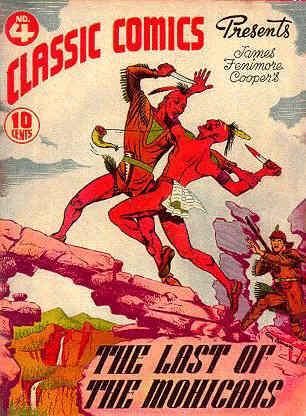
Movie Monday: "Last of the Mohicans" a film by Michael Mann, 1992

CC_No_04_Last_of_the_Mohicans.JPG

Last of the Mohicans (1992) a film by Michael Mann

I’ve held on to this film in DVD format for several reasons. Firstly, it is a good film that showcases quality actors and quality script that stands the test of time. Secondly, the price. $5 at a big box store. This historic drama tells the story of a quickly disappearing way of life, as two cultural worldviews come into conflict and inevitably arrive at an endgame where one side wins, and one side loses. Daniel Day Lewis plays the main protagonist, Hawkeye, an adopted white man frontiersman based on novelist Cooper’s character Natty Bumppo. His adopted father Chingachgook, played by Russell Means, who did not start his acting career until he was in his 50’s. Wes Studi portrays Magua, enemy of Colonel Munro (John Maurice RoĆ«ves) and a main antagonist of the film. The casting embraces diversity with sensitivity towards actors of indigenous ethnicity.


The opening shows Hawkeye (Lewis) stalking a buck with his adopted father (Means) and brother, Uncas (Eric Schweig). After their successful hunt, they thank the spirit of the animal and thank him for giving up his life for their benefit. They hunt and trap for their sustenance, trading with the Dutch for silver, as opposed to the British and French custom of trading in “wampum and whiskey.” Their frontier world comes to an end with the war between Britain and France impacting their settler neighbors and friends, the Camerons, who participate in the colonial militia in defense of their homes and in (nominal) support of the British Crown. When the need to protect their homes from war parties conflicts with the needs of the British military, the militia and fort commander Munro come into conflict as to which needs are more important.


The emotional impact of the film is reflective of Mann’s style of film-making. As a director, he portrays the emotional side of the story and the human element in subtle, but engaging, ways. The source material, he said, was a wealth of information but not the be all for his inspiration.


"It's not a very good book," Mann said of Cooper’s original novel. He mentioned the novel comes from a landholding perspective, and “is almost a justification for a massive land grab…that the Euro-Americans will be a better steward of the riches that God bestowed upon American Indians. And that, of course, was not the perspective of American Indians. So the revision of history was one of the things I didn't care for in the novel.” This reflects the times, when many investors saw stewardship of the American continent as justification for their increasingly harsh treatment of indigenous Native American groups.


While the story is historic fiction, Mann captures existential human conflicts that many viewers can relate to. Duty to a greater cause vs freedoms and liberties, self-interest and the honor of the ethnic group are among a couple of the qualities explored in this film.


Overall, this is a capable film that succeeds in drawing the viewer into the characters. While a few scenes seem forced, or the dialogue a little stale, it does not greatly detract from the quality of the film and the actors. Daniel Day Lewis famously only ate what he killed, and learned the skills of a frontiersman to give a more capable performance as Hawkeye. Viewers will appreciate such attention to detail, even though it sometimes teeters on the cliche “white man saves the minority” narrative that comes with such films and Dances with Wolves or Avatar.


Purchase or Stream "Last of the Mohicans" via Amazon

History Notes:

Native American cooperative relationships with European powers
Nathaniel Poe's role as central or peripheral to events
Source material of the original novel and the 1992 film
historical fiction vs factual information


Monday, July 6, 2015

Movie Monday: "Picture Bride," a film by Kayo Hatta

Department of Labor Picture Bride Documentation
Wikimedia Collection

Hatta, Kayo. "Picture Bride," starring Kido Yuki, Takayama Akira, and Tamlyn Tomita, 1995.

It was by chance I happened upon “Picture Bride” at the library and was moved to rent it. A riveting historical drama, "Picture Bride" depicts the life of a young Japanese immigrant woman working on the sugar cane fields in Hawaii during the early 1900s. It shows how both characters used deception to improve their chances of sealing the arranged marriage. Photography innovated the “picture bride” system that initially relied on written letters alone or face-to-face meetings. 

This film provides a solid script for strong performances that make the film particularly moving. Lead actress Kudo Yuki gives picture bride Riyo the emotional expressions that capture the apprehension and exhaustion a newly arrived city girl experiences under field conditions. Actor Takayama Akira ably expresses the hard life and defeatist mentality many bachelor field hands experienced under the Gentleman's Agreement of 1907 and prejudicial labor relationships. Finally, Tamlyn Tomita supports the leads with her capable performance as a strong young picture bride who must take on the roles of mother and mentor. One important aspect is that the cast are all capable Japanese and Japanese-American actors, a novel circumstance given the recent controversial casting choices in 2015 Hollywood.

When Riyo (Kudo) first arrives at the immigration office on the shores of the territory of Hawaii, she meets her husband for the first time, a field hand (Takayama) almost two decades her senior. This fact, not shown in the youthful photo he sent, sets up tensions from the start. The various hardships the two newlyweds face include prejudicial ethnic conflict with white overseers, labor conflicts with fellow Filipino field hands, as well as the appeal of gambling as a downtime activity. Couple this with the relationship built on lies and the film contains plenty of tension and conflict. The challenges these characters face will illuminate an almost forgotten historical exchange network that greatly disrupted immigration to the United States.


One of the strongest aspects of this film is the human element that makes it so relatable to a variety of viewers. Many of us can relate to the class challenges of trying to get ahead in a tough work and social environment, particularly when it seems like the paychecks are never quite enough. Viewers may relate with the ethnic conflicts that plague both historic societies and today. For me, this film made me realize how blessed I am in my own life, particularly the great physical toil these characters face each and everyday, and how they manage to find positives.


Overall, this film is a great peek into the historic condition of “picture brides” under the Gentleman's Agreement of 1907. Not only does it depict the ethnic conflicts Filipinos and Japanese field workers faced, but also the different ethnic hierarchies that native Hawaiians felt in relation to the Anglo landowners and European (Portuguese) overseers. While the film does slip into too much pathos at times, the narrative does manage to express an accurate depiction, perhaps less intense than some authentic experiences, of Japanese immigrants under an inherently prejudicial legal and social system. If you’re a fan of historical dramas, this may be the film for you. Please post comments or suggestions below, and what films you'd like to see reviewed in future posts.


Purchase "Picture Bride" or stream via Netflix here.


Historical Notes for discussion in the comments:

  • Ethnic interrelationships and labor: Anglo and Euro owners vs. laboring minority; labor vs labor between Filipinos and Japanese
  • Labor conflicts, the company store, $1 fee for lack of work, $. 65/day and $300 to go back to Japan
  • Asian, mainly Japanese and Filipino actors cast in the film, Japanese language used instead of English (think Sayuri/Memoirs of a Geisha)