Monday, January 25, 2016

Movie Monday: "All for Liberty," a film by Chris Weatherhead, 2011.


[Public domain], via Wikimedia Commons

Sometimes it is not the most flashy or well-funded films nor, even, the story itself that is significant in a film. Part of the charm, perhaps, of historical dramas are that the filmmakers use creative license to create a coherent narrative, grounded in historical source material. All for Liberty is not a high-budget film, nor does it really stand up to modern Hollywood conventions, despite being released in 2011. This film depicts the struggle for Independence during the Revolutionary War, and centers on little known Henry Felder, a Swiss-German colonist who settled in South Carolina and participated in the war, alongside his family.

Felder is capably acted by descendant Clarence Felder, who brings his obvious passion for the story into his performance. Actor Felder's stage experience is clear as many acting techniques (which look overdone on film) are more suited to the limitations of live stage than film.

The film focuses on several events from Felder's life, including his writing of the Articles of Separation from the English King c. May 1776. There are several scenes of skirmishes with British forces as they advance through the South, and the film closes with the surrender of Cornwallis.

So little, outside the regional histories, is known about Henry Felder, and the fact that the screenplay was penned by a descendant brings some historical aspects of the film into question. As a viewer and a student of history, sources like this film become problematic without supporting evidence. Further, one must question the facts based solely on one point of view. For me, however, this is not the most significant aspect of this film. My favorite part of the film is actually the last ten or so minutes, as the dialogue shifts to a kind of "concluding paragraph" that asks the viewers to seek out information on those who are not celebrated in the historical narrative, and learn about the common men and women of historical events. Unfortunately, this is not always possible because sources often say little about the "little people," those who supported the heroes and folklore legends of history. This, for me, is the strongest lesson from this film. There is never just one man or one battle that created history, but a total narrative that covers the leaders and the followers, the logistical people, the "little people."

This film is not "good" in the traditional sense, and I often found myself looking at how much longer the movie was. It relies heavily on the story of Felder and even the battles, while more dramatic than most of the movie, are not the center of the story. Perhaps that, too, is a strength in disguise. Battles, while having a place in history, cannot be the only picture, so having a film focus on the people is refreshing. The acting quality is sporadic, and some actors seem miscast or caricatures based on a cursory investigation of a "common" 1770s colonist. The narrative also doesn't go much into the complex ethnic relations, mainly between Africans and Anglos. The film also only gives a simplified look at Anglo-Native American interactions, although does recognize that the Anglos were "inevitably" going to take over (of which the Native American character stoically nods). This film is not a documentary, although the longer expository voice-over narration gives that feeling. Nor is this film concerned so much with historicity as it is with telling Felder's story.

This film is a project of love, as Clarence Felder obviously appreciates the role of his ancestor in the Revolutionary War. Some viewers will be intrigued by the story and hopefully will be moved to investigate the lesser known stories lost to history. This is my hope for viewers of this film, that their curiosity will bring them to more interesting historical tales. Others will be deathly bored, and honestly I had my moments. The dubious origin of the screenplay, the romanticized relations between Africans, Native Americans and some Anglos (while existent, was not as equal as the film would have viewers believe), and the focus on a single man make the historical value rather weak. Nevertheless, the call for viewers to investigate the lesser known aspects of history is the single strongest message to come from a film recently, in my opinion. This film doesn't demand that we take one story to be the only story, and "official" version of history, and that, to me, is priceless.

Stream "All for Liberty" on Amazon Prime.

Monday, January 18, 2016

Movie Monday: "Selma," a film by Ava DuVernay, 2015

Yoichi Okamoto [Public domain], via Wikimedia Commons

Films that depict historic events often come with the necessity of literary license in the specific content of the film, either because there are gaps in the historical record or the success of the film relies on dramatization. Much has been said about the film Selma, and I am happy to have seen it on Amazon Prime. This historical drama depicts the events of the Civil Rights Movement that lead up to the march to Montgomery and, eventually, President Johnson calling for the Voting Rights Act of 1965. What members of the various movements endured, the struggles and challenges not only from Southern whites favoring the status quo, but the doubts that arose in their own minds, and I love that about film.

The film showcases the acting abilities of a variety of quality actors, including David Oyelowo, who depicts Dr. Martin Luther King Jr. Tom Wilkinson ably commands the screen as both a talented actor and an embodiment of President Lyndon B. Johnson. Carmen Ejogo shines as Coretta Scott King, and was personally approved by Ms. King to portray her in the film. Tim Roth brings his acting abilities to bear as Alabama Governor and (at the time) unashamed segregationist George Wallace, who also memorably stood at the doorway of the University of Alabama's Foster Auditorium as the college was desegregated by law. I believe the casting was very carefully done, as no major faults in delivery or quality exist in this film for me.

The film opens with two events that shape the flavor and nature of the Civil Rights Movement. First is the image of Dr. King (Oyelowo) receiving the Nobel Peace Prize in 1964. This is paired with scenes of the 1963 KKK bombing of the 16th Street Baptist Church, which left four children dead. The circumstances and context for the film are set up early, with a scene where Annie Lee Cooper (played by Oprah Winfrey) is denied the right to vote by the white registrar in Selma (although legally African Americans were afforded the right to vote, the decision of "fitness" for that right was largely left to individual registrars who, in the South, set up arbitrary, impossible questions and conditions for applicants). These events set the stage for the Civil Rights Movement's various organizations (including the Southern Christian Leadership Conference (SCLC) and the Student Nonviolent Coordinating Committee (SNCC)) to respond with different tactics and philosophies, both of which are touched upon in this film.

One of the most important outcomes of films like Selma, that moves beyond their occasional lack of historicity, or absolute historical authenticity, is that audiences are reintroduced to significant events in history. My hope is that viewers will explore the fight for civil rights as conducted by King and others on their own, while also realizing that the fight is not yet won. Selma and other films like it are, at their core, films about American identity, but also what it means to be part of the human species. It calls us to recognize the inherent worth in ALL people, regardless of race or religion.

The great tragedy of the events in this film is, while some creative license is taken when interpreting individual characters or their thoughts on Civil Rights (most critical was the portrayal of President Johnson as a reluctant supporter of Civil Rights when, from the documents, Johnson was a firm believer in King's mission), the core events, murders and prejudicial treatments of African Americans is true and largely uncontested. Anglo American supporters of the Movement were often branded "white niggers" and brutally attacked and murdered. African Americans who peaceably protested the systematically unfair treatment were imprisoned by their government, and spit on by their neighbors. Dr. King was assassinated.

American civil rights are an ongoing fight, and not only for African Americans, but all ethnic groups. Civil rights for African American populations are also at the forefront of current events, with murders of African American suspects plastered all over the headlines of the national media. Though we as a country have come a long way since 1965, Americans must all look to their consciences and continue to question just what values will be carried forward into the future, not only for the country itself, but for international relations and human rights, as well. The eyes of the world are always upon us, are we acting in a way to warrant such attention? Selma is a great introduction for further exploration of what the Civil Rights Movement in the US meant to the development of our yet imperfect Union.

Stream "Selma" on Amazon Prime.

Monday, January 11, 2016

Movie Monday: "Proud," a film by Mary Pat Kelly, 2004.

Public Domain via Wikimedia Commons

This film came to my attention through Amazon Prime, as it was recommended based on my searches for American History films. I am happy that I got the chance to see this film. The narrative revolves around the exploits of the USS Mason (DE-529) destroyer escort during WWII, manned by a nearly all African American crew at a time when the military was segregated. This American history narrative is not well known or explored outside specialty history courses at a select few campuses. Unfortunately, historical narratives are sometimes limited by the prejudices and norms of the time they're written, and the USS Mason's narrative is a casualty of this condition. It is only from the 1970s, 80s and 90s that "minority history" has gained more recognition in the mainstream historical narrative.

Films like "Proud" are useful for introducing the audiences to hidden narratives, and serves to peak interest in the respective subject matter. "Proud" has a good quality cast that captures both the triumphs and shortcomings of WWII society and military efforts. The racism is present, and real, but is not overly front and center. The narrative focuses not as much on what society believes these men cannot do, but shows how the men themselves respond to the conditions they are introduced to, both in the navy and in the war. I'll admit, I know little about the mainstream actors in this film, so I cannot adequately comment on their respective filmographies. On viewing this film, however, it seems like each actor brought their respect and efforts to bear in their characters. What I appreciate a lot about this docudrama is the use of actual primary source footage from the USS Mason's missions. I believe this supports the overall structure of the film, as a grandfather narrating his experiences and memories to his grandson and friends.

The film opens with one of the main characters, as an older man, narrating his experience in Harlem, and how it became a home for him and his family. His grandson is living with him, and invites his friends over to listen to loud music in the early morning hours. His grandfather is woken up and goes downstairs to tell them to turn that noise off, and how the living situation really isn't working out. This sets the stage for him to tell his story, and how recognition for their efforts has been a long time coming. He has not held on to anger about the slight, however, and this paints the portrait of one seaman's response to their prejudicial treatment. He says that if he had given in to anger and resentment, it would have justified "their" (white men in government, American society, all the doubters, etc) point of view of African Americans at the time.

This film is intriguing to me, as I admit knowing relatively little of the African American experience during World War II. My own research mainly centers on Asian American experiences during World War II, so I am thankful for having another perspective. While it is not surprising to see that prejudice reigned among sailors and government officials during this time, what was refreshing was how the film portrayed the Captain of the USS Mason caring for his crewmen within the context of sailors, not African Americans who happen to be sailors. Further, I was surprised at the treatment of the sailors on shore-leave in Northern Ireland, where the men welcomed them as Yankees first, not black men. The narrator states that he was surprised the crew had to travel all that way to be treated like Americans.

Any viewer interested in the lesser known, but well worthwhile, stories of WWII may like this film. While not perfect, it is a refreshing plot reminds viewers that Americans of all backgrounds fought against the Axis Powers. Whether viewers see too much patriotism woven in this story is largely left to the opinions of each individual, but it is hard not to feel a sense of national pride any time there is a war film. Hopefully, films like "Proud" will be shown more often in classrooms, if not necessarily for the raw historical accuracy, then to visually represent alternative stories for students not familiar with the role all Americans played in the Allied victory in WWII.

Stream or Purchase "Proud" on Amazon

Monday, December 14, 2015

Movie Monday: "Grave of the Fireflies," a film by Isao Takahata, 1988

By Pkisme (Template:Pkisme) via Wikimedia Commons

"Grave of the Fireflies," a film by Isao Takahata, 1988.

A little late, but this review is dedicated in remembrance of December 7th, the 74th Anniversary of the Imperial Japanese attack on Pearl Harbor. I chanced upon this Studio Ghibli gem in 2005 while studying abroad in Tokyo, Japan. I had had a rough day, and wanted a film to ease my uneasiness. This was definitely NOT a feel-good film, and I should have watched director Isao Takahata's other work, My Neighbors the Yamadas. Having said that, I do not regret the chance viewing. This film depicts the struggle of the everyday people to survive during war. The story revolves around a brother and sister in World War II Kobe, during the American firebombing campaigns. While not originally intended as an anti-war film, in North America the graphic nature and drama of this film inspired this kind of take-away message.

In my opinion, this is probably Studio Ghibli's most serious and painful film. Based on Akiyuki Nosaka's semi-autobiographical story of the same name, Hotaru no Haka or "Grave of the Fireflies" showcases the quality we've come to expect from Studio Ghibli. The voice acting, as viewed in Japanese, captures the innocence of childhood under extreme stress. I feel like it captures a realism that is almost unavailable with real actors, although the sheer weightiness and tragedy of the narrative reminds me of Osama, Siddiq Barmak's 2003 film about post-Taliban Afghanistan. The art style is classic Studio Ghibli, and fans will recognize the hues and color coordination of Michiyo Yasuda, although innovative use of color made this film remarkable for its softer palette, given the plot.

Reminiscent of Sir Richard Attenborough's 1982 Ghandi, audiences are immediately given the fate of the main characters. This does not detract from the film, but sets the stage for the unfolding narrative. Ninth-grader Seita narrates his sister Setsuko and his fate just after the unconditional surrender of Japan to the Allies during World War II. He is dressed in a nice school uniform as his sister recovers a Sakuma Drops tin, tossed by a janitor into a garbage field near Sannomiya Station. The film then moves back in time, as Seita and Setsuko rush to secure a few belongings before heading to the bomb shelter with their ill mother.

I believe the significance of this film is not who was to blame for the war. In my viewing, I see the often silent tragedy of warfare is the real human cost to the civilians caught in a conflict. We see this now with the ongoing conflicts in the Middle East, just as the Japanese Americans confinement after Pearl Harbor, to the enslavement and torture of East Asian and Southeast Asian guerrilla fighters and civilians to fuel the Japanese war machine in World War II. While it is clear the Allies are bombing Kobe, there is no American person shown in the film. Instead, in true Studio Ghibli style, the film focuses on the challenges of two children, trying to survive in wartime. Among many themes, we as viewers are introduced to the selfishness of family and neighbors during times of scarcity. We see the real cost of war is not only on the battlefield, although a terrible venue, but in the homes and minds of the people whose military and politicians are competing for world domination. Further, I feel this kind of film illustrates the important difference between civilians of an enemy nation and an enemy combatant. A distinction often ignored in many popular conceptions of wartime history.

This is not a film to watch casually while doing household chores. Frankly, I have a hard time actually recommending this film for entertainment, but it is necessary that any student of history, patriot, politician and educator see it. A truly educational, informative and heartbreaking look into the realities of war. In the United States, the anti-war message is a strong current, however the original Japanese version, and vision from Isao Takahata's direction, had a message of what can happen when hopelessness overcomes the will to survive, and the failure of family and the failure to survive in the face of hardship. Either way, this film commands an hour and a half of the viewer's undivided attention. Your eyes will be opened, if a little moist.

Purchase "Grave of the Fireflies" on Amazon.

Monday, November 16, 2015

Movie Monday: "The Mountain Thief," a film by Gerry Balasta, 2010

By Kounosu (Own work (own picture)) via Wikimedia Commons

"The Mountain Thief," a film by Gerry Balasta, 2010.

There are always a few films that speak to the senses on a deep, personal level. Stories of humanity, particularly ones that burst open the small cultural and social bubbles we all find ourselves living in, are particularly powerful and necessary. "The Mountain Thief," I believe, should be required viewing for all college students, "first world" citizens worldwide and professed religious individuals who would seek to know and better the world. "The Mountain Thief" shows viewers what happens when communities are forced, by powers far beyond their own immediate influence, to survive on the garbage of others. These individuals find their sustenance by sifting through and reselling recyclables from the trash of the more wealthy people in the Philippines (but this plays out in so many areas across the world). It shows that conflict and community are possible in even the most trying circumstances.

What strikes me about this film is that all the actors are amateurs. In fact, all of them are scavengers in the Philippines, so this leads to an air of realism unattainable by even the most seasoned professional actors. I encourage viewers to watch to the very end, as the filmmakers describe the real lives and dreams of the actors who took part in this film. While many of their dreams may seem trivial to a first-world viewer, they show just how disparate the bounty of "modern living" is distributed throughout the world. Among a few are to cure a son's club foot, to learn to use a computer, to build a home at the foot of mountain of trash, to learn to read and write. These are things we as Americans take for granted, as an unalienable right as Americans, and things that are largely unavailable and unobtainable to many throughout the world.

The film opens as a Simon, the communities drug addict (he sniffs glue, paid for by stealing from other scavengers) is stealing a small sheet of corrugated metal from another family's makeshift roof. He is found out and runs away through a maze of shanty neighborhoods, running into Ato and Elmer on their way to the makeshift basketball court. He stumbles into Julio and his son, Ingo. They are newly arrived from a war-torn region in Mindanao, where his family owned rice fields that were burned in the fighting. They are seeking to survive through scavenging in Little Hope, the community at the foot of the trash mountain. The film makes no illusions as to the circumstances of these individuals. Survival is their daily aim, and though community exists, most are looking out for their own (and their family's) interests.

One of the best things about this film is that it pulls no punches. It also ends rather ambiguously, which may upset some viewers of modern Hollywood film-making. The film understands its own circumstances and does not give the viewer the satisfaction of a happy ending, particularly because for individuals like this film, there is no guaranteed happy ending.

You may be wondering why this film is even worth watching, as it seems to be a real downer. Well, in actuality, it kind of is, considering it is reality for many across the world. There are lighthearted moments, particularly with Ingo, who listens to the local religious zealot Ato teach about prayer, then acts it out on the highest mountain of garbage, because it is "beautiful up there, and close to the heavens." Ingo and his friend find and enjoy an unopened can of soda, a rare treat.

The film is edited to be rather artistic, as scenes will replay to emphasize the overall narrative, and some scenes will not make sense until later in the film. It reminded me a little of the film version of Gandhi, where the viewer sees the inevitable end of the film immediately, but does not understand the context until watching the entire film.

In the end, this is a very powerful statement on the state of the developing world, and asks the developed world just what our role is in perpetuating this environment. As consumers, do we have a moral obligation to address the "end" result of our consumed goods? This film also reflects on, though not explicitly, the historical circumstances that developed this environment.

Did the independence of the Philippines come too rapidly? Would the Philippines have been better off as a territory for a while longer, until basic infrastructure and stability could be achieved (like in Japan, post WWII?)

Although politics seems to play a small role in the film directly, viewers who know will recognize the handy work of corruption in the Philippines, among politicians and other wealthy families who benefit from others' poverty. But these actors care little for politics and international policy. They are looking for a few pesos to buy a little rice to feed their families for another day.

To see how you can contribute to the Mount Hope Project to help the actors in this film, see "The Mountain Thief" website here.

Stream or Purchase "The Mountain Thief" from Amazon.

Monday, October 12, 2015

Movie Monday: "Ilo Ilo," a film by Anthony Chen

This week, I wanted something that was completely different for me. I happened to find just this in Anthony Chen’s “Ilo Ilo,” a slice-of-life drama showcasing life in Singapore c. 1997, during the great economic crisis in Asia. I also reveals the dynamic between different ethnic groups within South East Asia, and hints at the relative hierarchy of each group. The relative economic differences between, say, Singapore and the Philippines is also shown through the characters’ relative situations, however it doesn’t reflect on which characters are “good” or “bad” in the traditional sense. Many of the actors are unknown to me, and likely many in Western cinema. The screen time is generously shared among the four main characters, so establishing who the “lead” is is problematic for Western audiences. Singaporean veteran actor Chen Tian Wen captures the hardships inherent as the struggling family patriarch Teck. Yeo Yann Yann plays is wife Hwee Leng, who is pregnant with a daughter and dealing with the stress of a hard marriage and a hard job. Newcomer Koh Jia Ler plays Jiale, a parent’s nightmare. A young man faced with his parents’ rocky marriage and hard life, he acts out at school and captures the challenges of any young boy learning for himself. Finally, we have Angeli Bayani playing Terry, a migrant Filipino housekeeper and maid. Bayani’s facial expressions, I think, capture the sort of “I must endure it” attitude necessary when faced with such hard choices as leaving your home for work, and the inherent, though not always obvious, prejudice against Filipinos among other South Asian groups. Many of the performances were spot on, and arguably very little could be added to improve the feel of the film. I appreciate that stereotyping wasn’t as prevalent in this film as in some American-made films, which often portray Asian characters, even in 2015, as martial arts masters, wise teachers and dragon ladies.


Jiale (Koh) is a troubled young man. He acts out at school and is constantly studying gambling odds when he should be focusing on his school lessons. His parents Teck (Chen) and Hwee Leng (Yeo) are at their wits end, finding their own stresses at work while trying to make allowances for their son. Finally, they decide to hire Teresa (Bayani), a Filipino mother looking for work in Singapore to help support her young infant son back in the Philippines. This film shows hardship piled on hardship, and helps introduce Western audiences to a different world that may be more similar than we’d think. There is good material here for looking at the ethnic hierarchies within South Asia, as well as the relative economic positions of immigrants relative to the majority. There is also just a good, quality film that is different than much of what comes out of Hollywood.


I found this film to be eye opening. Specifically, I have not seen many Singaporean films, nor have I had access to many films not made in China, Hong Kong, Korea, or Japan. It is refreshing to see films that showcase something different, without devolving into a kind of “poor me” attitude that is easy to take when showing non-Western films to Western audiences. The characters do not ask for your sympathy, but seem to say “see my endurance.” In the end, however, the human element tries to ensure we do feel for the characters, even troublemaker Jiale. Viewers will likely relate to the economic hardships the characters face, as much of the world emerges from an economic depression unseen for decades. Even when things get rough, however, the characters face their troubles as best they can.


This film is powerful, almost overly so. There were many moments where I felt “wow, I didn’t know it was like that.” The plight of Filipino immigrants trying to send money back home is a familiar situation with many Mexican immigrants looking to feed their families back home, especially here in California. This is not ancient history, or likely even history, as much as it is a reflection of what still happens today. While there is value is realizing what was during the 1997 economic downturn, analogies can be made today, and likely will apply in the future as well. Anyone interested in seeing something different (for me), and seeing a different world outside the most common depictions of Asian cinema would do well to check out “Ilo Ilo.” I wasn’t disappointed.


Points of Interest:


Filipino women as housekeepers and maids, jealousy of relationships with children
Ethnic relations within East and Southeast Asia
Singaporean culture as it relates to other neighboring nations
“under the table” work of worker immigrants


Corporal punishment in cultures

Monday, July 27, 2015

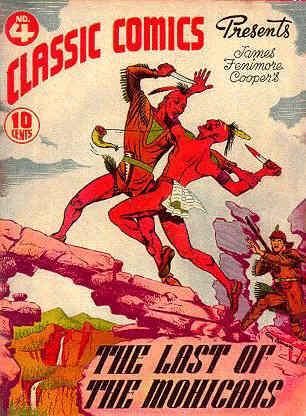
Movie Monday: "Last of the Mohicans" a film by Michael Mann, 1992

CC_No_04_Last_of_the_Mohicans.JPG

Last of the Mohicans (1992) a film by Michael Mann

I’ve held on to this film in DVD format for several reasons. Firstly, it is a good film that showcases quality actors and quality script that stands the test of time. Secondly, the price. $5 at a big box store. This historic drama tells the story of a quickly disappearing way of life, as two cultural worldviews come into conflict and inevitably arrive at an endgame where one side wins, and one side loses. Daniel Day Lewis plays the main protagonist, Hawkeye, an adopted white man frontiersman based on novelist Cooper’s character Natty Bumppo. His adopted father Chingachgook, played by Russell Means, who did not start his acting career until he was in his 50’s. Wes Studi portrays Magua, enemy of Colonel Munro (John Maurice Roëves) and a main antagonist of the film. The casting embraces diversity with sensitivity towards actors of indigenous ethnicity.


The opening shows Hawkeye (Lewis) stalking a buck with his adopted father (Means) and brother, Uncas (Eric Schweig). After their successful hunt, they thank the spirit of the animal and thank him for giving up his life for their benefit. They hunt and trap for their sustenance, trading with the Dutch for silver, as opposed to the British and French custom of trading in “wampum and whiskey.” Their frontier world comes to an end with the war between Britain and France impacting their settler neighbors and friends, the Camerons, who participate in the colonial militia in defense of their homes and in (nominal) support of the British Crown. When the need to protect their homes from war parties conflicts with the needs of the British military, the militia and fort commander Munro come into conflict as to which needs are more important.


The emotional impact of the film is reflective of Mann’s style of film-making. As a director, he portrays the emotional side of the story and the human element in subtle, but engaging, ways. The source material, he said, was a wealth of information but not the be all for his inspiration.


"It's not a very good book," Mann said of Cooper’s original novel. He mentioned the novel comes from a landholding perspective, and “is almost a justification for a massive land grab…that the Euro-Americans will be a better steward of the riches that God bestowed upon American Indians. And that, of course, was not the perspective of American Indians. So the revision of history was one of the things I didn't care for in the novel.” This reflects the times, when many investors saw stewardship of the American continent as justification for their increasingly harsh treatment of indigenous Native American groups.


While the story is historic fiction, Mann captures existential human conflicts that many viewers can relate to. Duty to a greater cause vs freedoms and liberties, self-interest and the honor of the ethnic group are among a couple of the qualities explored in this film.


Overall, this is a capable film that succeeds in drawing the viewer into the characters. While a few scenes seem forced, or the dialogue a little stale, it does not greatly detract from the quality of the film and the actors. Daniel Day Lewis famously only ate what he killed, and learned the skills of a frontiersman to give a more capable performance as Hawkeye. Viewers will appreciate such attention to detail, even though it sometimes teeters on the cliche “white man saves the minority” narrative that comes with such films and Dances with Wolves or Avatar.


Purchase or Stream "Last of the Mohicans" via Amazon

History Notes:

Native American cooperative relationships with European powers
Nathaniel Poe's role as central or peripheral to events
Source material of the original novel and the 1992 film
historical fiction vs factual information


Monday, July 20, 2015

Movie Monday: "John Adams" an HBO series by Tom Hooper

Portrait of VP John Adams


On the recommendation of history colleagues, I found a copy of the HBO Series “John Adams” at the local library, and I’m not disappointed. This historical drama follows the career and presidency of Founding Father John Adams, including his participation in the American Revolution and his activities in foreign arenas like France and Britain during the establishment of the American Government. This series doesn’t avoid the darker aspects of Adams’ experience, and seems to give a balanced view of his life.

Like many HBO series, the acting is on point. Lead Paul Giamatti brings this John Adams to life and reflects his educational background in theater and broadway. David Morse towers over the other characters as bigger-than-life General and President George Washington, and gives a subdued performance as the first leader of the new government. Laura Linney is an excellent Abigail Adams, giving life to the famous first Second Lady and second First Lady of the United States.

As the series opens, Adams (Giamatti) is a successful lawyer in Boston, with wife Abigail (Linney) and children John Quincy, Abigail and Charles. The cries of “Fire! Fire!” echo through his home as British soldiers fire upon a crowd of protesters to Britain’s overreaching influence in the colonies. Adams is the only lawyer in Boston willing to take the case, which opens him up to attacks and criticisms from his patriotic neighbors.

The benefit of a series such as “John Adams” is how human our founding heroes become when treated in a balanced manner. Putting aside the romanticism surrounding the founding of the United States, a student of history will appreciate the nuanced treatment. Additionally, the series does not marginalize the other key members among Founding Fathers (and Mothers), which can sometimes happen when a series focuses on one particular subject, or minimize their influence on the main character. The humanity present in this series brings the founding members down to a relatable level, in particular the balance between work and life, family, religion, and the fundamental principles of the United States.

What I found most instructive is how contentious the developing government of the United States was during the first few years. Every member had their own interests and concepts of who held what power, and the extent of that power over the individual states. As a newer student of early American history, I found these insights informative for future study. Additionally, the sheer weight of what was before the Revolutionary leadership, founding a new country, is not lost on the artists who changed the characters’ appearance based on circumstances. The various epidemics that swept the New England territories, coupled with the stress, play out on the faces of the actors throughout the series.

A viewer hoping to bolster their patriotic feelings will likely feel kinship towards the characters in this historical drama. Students of history will appreciate the perspectives of the film, and the contentious nature as more reflective of reality than the simple founding myths many of us grew up on. There is very little to fault in this series, from my perspective, as there was clearly enough financial support to give “John Adams” a suitable treatment.


Purchase or stream "John Adams" through Amazon

History Notes:

The differences between fact and fiction in historical drama (see historical inaccuracies)
Religion and political backgrounds of the Founding Fathers and others
Family life of John Adams
David McCullough's book "John Adams," inspiration for this HBO series

Tuesday, July 14, 2015

Movie Monday: "The Patriot," a film by Roland Emmerich


“The Patriot” is one of those films that might spark interest in American History for some, but eventually turn those same historians off for its portrayal of the American Revolution. At its core, “The Patriot” is both a war film and a historical drama about a war veteran who is once again called to sacrifice his peace for a greater cause. His response to the casualties of war sets up the tension that builds and releases throughout the film. The production values are rather good, something that is expected for a mainstream film with a leading actor like Mel Gibson. While not on the same level as Gibson’s earlier “Braveheart” in popularity, “The Patriot” does showcase Gibson’s ability to play a tortured and sacrificial character who gives up much for a greater purpose. While Gibson is inevitably the star of the show, Heath Ledger puts in a strong performance as Gibson’s son, Gabriel Martin. Gabriel is eager to join the Continental Army and fight for “the Cause,” while his father is much more tempered against jumping back into war. Jason Isaacs provides a convincing performance as the “bad guy” British Colonel William Tavington, who embodies much of what a man will do during war. Tom Wilkinson is Lieutenant General Charles, Lord Cornwallis, a military genius and tactician who nonetheless falls victim to his preconceived notions against militia and their capabilities. There are a few understated performances by both supporting actors Donal Logue and Joely Richardson as militiaman Dan Scott and Martin’s sister-in-law Charlotte Selton, as well.

When the film opens, Benjamin Martin (Gibson) lives an idyllic life on his farm in 1776 South Carolina, working diligently in his workshop, attempting to make a working rocking chair (a task he’s obviously failed at several times, judging from the pile of scrap). He is a widower, but he capably raises his children with the help of African American servants and laborers. This peace is shattered when an Assembly in Charles Town is called to debate the cause of Revolution. There are Loyalists among the Assembly, but the majority supports fighting against the British, much to the apprehension of Martin, who saw action in the North American theater of the Seven Year’s War. His two elder sons, particularly Gabriel Martin (Ledger), are eager to support the fight, feeling it is a man’s duty to fight for his home and principles. The first show of British brutality involves an interaction between Martin’s second eldest son, Thomas, and the British Colonel Tavington (Isaacs), and sets up the goal for Martin throughout the film.

Viewers are inevitably going to be entertained by this film’s classic hero’s journey model, which follows the formula of heroic hardship and resolution through growth to a T. The biggest issue history buffs will have is the rather simplistic representation of the Americans as “good” and the British as “bad,” a dichotomy which almost never exists as cleanly as is portrayed. When portraying a nation-state’s founding myth, however, it is often popular to show the founders as heroic patriots. Another interesting aspect is the portrayal of African American participation in the Revolutionary War, particularly in a fighting context. It may surprise some viewers to know that African Americans were promised the opportunity of freedom, as well as bounties in some cases, for participation in the Revolution, both on the Loyalist and the Patriot sides. Often these African American soldiers were also integrated into existing units, either regular Continental Army units or state militia units. While not portrayed in the film, African Americans also participated heavily into naval operations on both sides of the war.

Overall, this film does successfully portray one narrative that will entertain and, for some, build emotional response to the battle for the United States. The history is very thin here, as Martin is a composite character with no direct analog in history. The simplistic characterization of Americans as good and British as bad will put some off, particularly historians and history buffs familiar with the complexities of the historical narrative. The production itself is obviously well-funded, and the performances of the lead and many supporting actors was strong and capable, leading to a rather successful film, overall.

Final verdict: 3.5/5 for strong lead performances, good production values, but a lack of serious scholarship and a simplistic portrayal of the two combatant sides.

Purchase or stream "The Patriot" on Amazon.

History Notes:

The true motivations of both Patriot and British combatants
Ethnic relationships: African Americans in War
Military tactics and acceptable responses to captured soldiers on both sides
Idyllic portrayal of 1776 South Carolina, tied to ethnic relationships

Monday, July 6, 2015

Movie Monday: "Picture Bride," a film by Kayo Hatta

Department of Labor Picture Bride Documentation
Wikimedia Collection

Hatta, Kayo. "Picture Bride," starring Kido Yuki, Takayama Akira, and Tamlyn Tomita, 1995.

It was by chance I happened upon “Picture Bride” at the library and was moved to rent it. A riveting historical drama, "Picture Bride" depicts the life of a young Japanese immigrant woman working on the sugar cane fields in Hawaii during the early 1900s. It shows how both characters used deception to improve their chances of sealing the arranged marriage. Photography innovated the “picture bride” system that initially relied on written letters alone or face-to-face meetings. 

This film provides a solid script for strong performances that make the film particularly moving. Lead actress Kudo Yuki gives picture bride Riyo the emotional expressions that capture the apprehension and exhaustion a newly arrived city girl experiences under field conditions. Actor Takayama Akira ably expresses the hard life and defeatist mentality many bachelor field hands experienced under the Gentleman's Agreement of 1907 and prejudicial labor relationships. Finally, Tamlyn Tomita supports the leads with her capable performance as a strong young picture bride who must take on the roles of mother and mentor. One important aspect is that the cast are all capable Japanese and Japanese-American actors, a novel circumstance given the recent controversial casting choices in 2015 Hollywood.

When Riyo (Kudo) first arrives at the immigration office on the shores of the territory of Hawaii, she meets her husband for the first time, a field hand (Takayama) almost two decades her senior. This fact, not shown in the youthful photo he sent, sets up tensions from the start. The various hardships the two newlyweds face include prejudicial ethnic conflict with white overseers, labor conflicts with fellow Filipino field hands, as well as the appeal of gambling as a downtime activity. Couple this with the relationship built on lies and the film contains plenty of tension and conflict. The challenges these characters face will illuminate an almost forgotten historical exchange network that greatly disrupted immigration to the United States.


One of the strongest aspects of this film is the human element that makes it so relatable to a variety of viewers. Many of us can relate to the class challenges of trying to get ahead in a tough work and social environment, particularly when it seems like the paychecks are never quite enough. Viewers may relate with the ethnic conflicts that plague both historic societies and today. For me, this film made me realize how blessed I am in my own life, particularly the great physical toil these characters face each and everyday, and how they manage to find positives.


Overall, this film is a great peek into the historic condition of “picture brides” under the Gentleman's Agreement of 1907. Not only does it depict the ethnic conflicts Filipinos and Japanese field workers faced, but also the different ethnic hierarchies that native Hawaiians felt in relation to the Anglo landowners and European (Portuguese) overseers. While the film does slip into too much pathos at times, the narrative does manage to express an accurate depiction, perhaps less intense than some authentic experiences, of Japanese immigrants under an inherently prejudicial legal and social system. If you’re a fan of historical dramas, this may be the film for you. Please post comments or suggestions below, and what films you'd like to see reviewed in future posts.


Purchase "Picture Bride" or stream via Netflix here.


Historical Notes for discussion in the comments:

  • Ethnic interrelationships and labor: Anglo and Euro owners vs. laboring minority; labor vs labor between Filipinos and Japanese
  • Labor conflicts, the company store, $1 fee for lack of work, $. 65/day and $300 to go back to Japan
  • Asian, mainly Japanese and Filipino actors cast in the film, Japanese language used instead of English (think Sayuri/Memoirs of a Geisha)