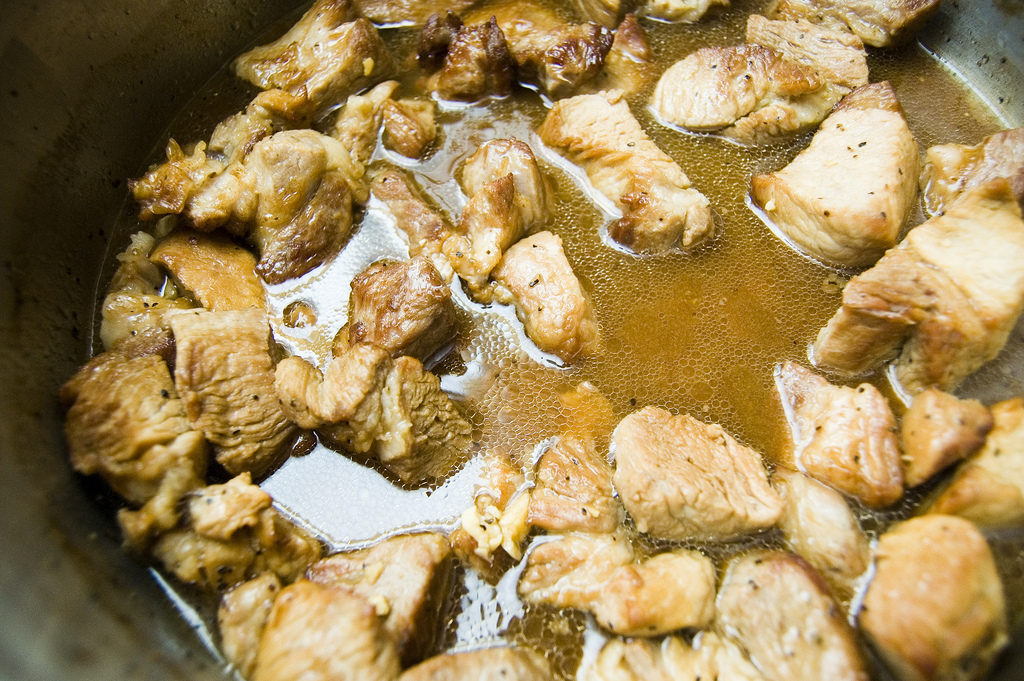
CC BY-SA 2.0, https://commons.wikimedia.org/w/index.php?curid=1381050 via Wikmedia Commons
Succulent pork adobo, notice the specks of pepper and the richly colored broth. Diverse spices are often coarsely chopped and dumped into the pot ahead of (or during) cooking.
Fabulous Filipino Adobo In Fifteen Minutes Prep
Don’t Have Time to Cook
Like you, I have days full of commitments. I’m not always able to eat wholesome, home-cooked meals, even when I want to. When I cook, often it is staple meals that, while comforting, don’t always expand my food horizons. On a particularly full day, I might resort to take-out or fast food, which reminds me just how hard I have to workout to counterbalance. As with any busy life, the answer is seeing where you can simplify.
I Already Simplify
I know, I know. You’ve already made things simpler for yourself. Maybe you’ve been cutting out unnecessary web surfing or cut the cable. Maybe you’ve even trimmed your budget and adjusted your work schedules to better balance in your work and life (in which case, this is a great way to help that goal!). Even so, sometimes there’s just not enough hours in the day to do everything we want to do. Sometimes, our meals suffer as a result. Shouldn’t the wellness of our bodies, the only one’s we know we get, be a priority? We can accomplish this in the kitchen with the investment in one basic but powerful tool.
Slow Cooker: Save Time, Eat Well
Take the hard work out of preparing a fresh, fantastically Filipino staple with this simple process using a fantastic, dump-and-forget style of cooking...the slow cooker! Slow cookers are versatile kitchen tools that can make breakfast oatmeal, lunch soups and dinner meatloaf, without taking up much counter space. Read on to learn more about this method, its benefits, and a recipe that can help you create your own family-style adobo at home with just fifteen minutes prep!

By Chef Pepín via Wikimedia Commons
Slow cookers are available at all big box stores and online retailers. Quality ones have more settings and temperature options to customize your cooking
Adobo Can Be Easy
Traditionally, adobo involves getting (or butchering!) just the right cuts of pork or chicken with a variety of veggies, spices and liquids, and boiling the mixture then letting it simmer for a few hours. Every family and every region in the Philippines has their own special recipe for their perfect adobo. With a slow cooker, you can skip the stovetop, and stove babysitting, and enjoy the full, home-style comfort flavors of this Filipino staple dish. Recipes abound, a quick Google search will give you so many ideas, but my favorite has a nice balance of Filipino vinegar (extra splash, courtesy of my Ilocano side!), soy sauce, garlic, bay leaves, pepper and a little seasoned salt. I also add potatoes and onion. You can definitely balance your favorite flavors, or adjust it for salt intake and other food considerations.
Exciting Meals with Big Benefits

By dbgg1979 on flickr (http://www.flickr.com/photos/dbgg1979/3880492441/) via Wikimedia Commons
Chicken adobo, bone-in for added flavor. Notice the bay leaves, they really make a difference! The drier skin is achieved by attentively searing the meat, allowing the broth to either cook out or reserving then readding a portion upon serving (depends on technique used).
Versatile
The beauty of Filipino adobo is that it is easily adaptable. There’s no “right” or “wrong” answer (though many families claim theirs is the best!) You can adapt the basic recipe provided here to suit your family’s needs. Try a robust vegetarian option, substituting your favorite stew-friendly, meaty vegetables. You can also adjust ingredients for food allergies (even soy, some recipes don’t have it!), protein preferences and levels of salt, sour and sweetness. Try experimenting and see which flavors work best for you and your family.
Easy
It takes more time to watch a daytime tv show than it does to prep this meal! Fifteen minutes means a home-cooked meal at the end of your busy day! Your home will also smell divine! Make sure to get all your ingredients and cutting surfaces, pots and utensils set up beforehand, and you save even more time! Just prepare the meats and vegetables, the marinade and preheat the slow cooker. You can safely leave it on throughout the day without threat of overcooking (follow your own slow cooker manufacturer’s instructions).
Nearly Foolproof
Because the slow cooker uses very low, slow heat, there’s very little that can go wrong with this dish. The important thing is to use the right cuts of meat, with a little fat in them, to ensure the protein doesn’t dry out. Also, cut your vegetables and meats to roughly the same size, or adjust, to ensure everything cooks properly. The recipe below provides more than enough soup to pour over the rice and avoid burning during cooking, but if adjustments are made you may want to check the pot occasionally.
Delicious
There’s many reasons Filipino adobo is one of the Philippines’ unofficial national dishes. One is...it’s delicious, in all its variations! Give your taste buds something a little different. Trying new things is one of the spices of life, and if you haven’t tried Filipino adobo before, you’ll be pleasantly surprised!
Low Cost
One of the benefits of using a slow cooker is the fact that you can safely use less pricey cuts of fattier protein (my favorite are chicken thighs, bone-in, and pork rib meat), which means dollar/pound savings at the grocery store. You can also adjust the recipe to make as little or as much as you need. It’s only limited by the size of your budget, your appetite, and your slow cooker. Contact me with your comments or to learn more about making simple Filipino meals at home! Mabuhay!
Try one fantastic recipe for slow cooker adobo here.


